Hiring the right candidate is important, but hiring them quickly can be just as critical. Long recruitment cycles can cause qualified candidates to lose interest, increase recruiter workload, and leave important positions unfilled for weeks.
According to SHRM's 2026 recruiting benchmarking data, the median time-to-fill for nonexecutive positions is 39 calendar days. At the same time, extra-large organizations experienced a 67% increase in median requisitions per recruiter, putting additional pressure on talent acquisition teams.
This is where AI recruitment software to reduce hiring time can make a meaningful difference.
From automated resume screening and candidate matching to AI-powered pre-screening and interview scheduling, recruitment technology can remove many of the repetitive tasks that slow down hiring.
In this guide, we'll explore how AI recruitment software can help organizations reduce time-to-hire while improving recruiter productivity and candidate experience.
What Is Time-to-Hire?
Time-to-hire is the amount of time it takes to move a candidate through the recruitment process, typically from the candidate entering the hiring pipeline to accepting an offer.
It is closely related to time-to-fill, but the two metrics are not the same.
Time-to-hire focuses on the candidate and their journey through the hiring process, while time-to-fill generally measures how long it takes to fill an open position.
Both metrics are important because recruitment delays can affect business operations, employee productivity, and candidate experience.
Why Is Reducing Time-to-Hire in Recruitment Process Important?
A slow hiring process creates several challenges for organizations.
1. Qualified Candidates May Drop Out
Highly qualified candidates are often considering multiple opportunities at the same time. If communication or interviews take too long, they may accept another offer before your organization completes the process.
2. Recruiters Spend More Time on Administrative Tasks
Recruiters can spend hours reviewing resumes, sending emails, scheduling interviews, updating applicant records, and answering repetitive candidate questions.
This reduces the time available for activities that require human judgment, such as candidate relationship building and hiring-manager collaboration.
3. Open Positions Can Affect Business Performance
When critical positions remain vacant, existing employees may have to take on additional responsibilities. This can create workload pressure and slow down business initiatives.
4. Candidate Experience Can Suffer
Candidates expect timely communication throughout the hiring journey. Delays can make the organization appear disorganized, even when the underlying hiring team is simply overloaded.
Where Does the Recruitment Process Lose Time?
Recruitment is made up of multiple stages, and delays can occur at almost every stage.
Manual Resume Screening
Recruiters may have to review hundreds of applications to identify candidates who meet the basic requirements of a position.
This becomes particularly challenging for high-volume hiring.
AI opportunity: AI-powered recruitment software can analyze resumes, identify relevant skills and experience, and help recruiters prioritize suitable candidates.
Candidate Sourcing
Finding qualified candidates manually can require searching multiple databases and recruitment platforms.
AI recruiting tools can help identify potential candidates based on skills, experience, qualifications, and job requirements.
Candidate Pre-Screening
Recruiters often conduct initial calls to determine whether candidates meet basic requirements.
Although necessary, these conversations can become repetitive when recruiters are hiring for multiple similar positions.
AI candidate screening platform can automate predefined questions and collect candidate information before a recruiter gets involved.
Interview Scheduling
Interview coordination can involve multiple emails and calendar checks between candidates, recruiters, and hiring managers.
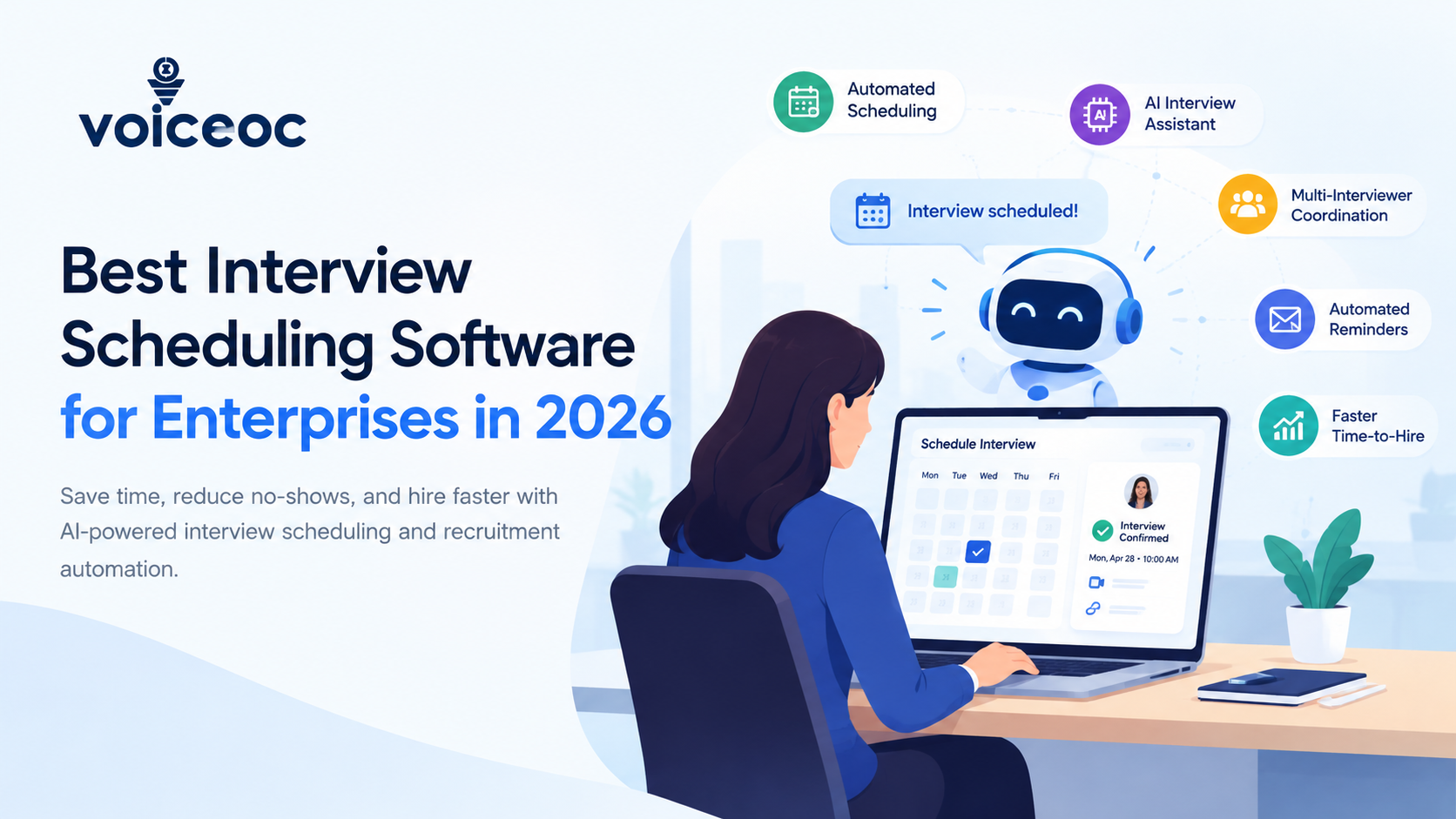
Automated interview scheduling can reduce this back-and-forth by coordinating availability and sending confirmations and reminders.
Candidate Follow-Ups
Recruiters may also spend significant time responding to routine questions and sending application updates.
AI recruitment assistants can help automate these interactions while keeping candidates informed.
How to Reduce Time-to-Hire Using AI Recruitment Software?
AI recruitment software does not necessarily make every hiring decision automatically. Its biggest value is often in reducing repetitive work and helping recruiters move qualified candidates through the hiring funnel faster.
1. AI Resume Screening
One of the most common applications of AI in recruitment is automated candidate screening.
AI can analyze resumes against job requirements and identify relevant:
- Skills
- Work experience
- Certifications
- Education
- Job titles
- Industry experience
- Required qualifications
Instead of manually reviewing every application from the beginning, recruiters can start with a more relevant candidate pool.
This can make AI resume screening particularly useful for organizations handling large numbers of applications.
2. Intelligent Candidate Matching
Traditional recruitment searches often depend heavily on keywords and job titles.
AI-powered recruitment platforms can go further by analyzing relationships between skills, experience, qualifications, and job requirements.
For example, a candidate may not have the exact job title listed in a vacancy but may possess the relevant skills and experience.
AI can help recruiters identify these potentially suitable candidates.
LinkedIn's 2025 Future of Recruiting research also highlights the growing importance of skills-based hiring. Companies making the most skills-based searches on LinkedIn were reported to be 12% more likely to make a quality hire.
3. Automated Candidate Pre-Screening
AI Recruitment Software can conduct an initial screening conversation through chat or voice.
Depending on the recruitment workflow, the system can ask candidates about:
- Relevant experience
- Skills
- Availability
- Location
- Salary expectations
- Notice period
- Job-specific qualifications
The recruiter can then receive structured candidate information instead of conducting every initial screening manually.
This does not mean AI should make the final hiring decision. Rather, it can help recruiters spend more time evaluating candidates who meet the initial requirements.
4. Faster Candidate Communication
Recruitment doesn't stop at screening.
Candidates may have questions about the role, application status, interview process, or next steps.
An AI recruiting assistant can provide immediate responses to common questions and support candidate communication outside normal working hours.
Faster communication can help create a more responsive candidate experience while reducing repetitive work for recruiters.
5. Automated Interview Scheduling
Once a candidate passes the initial screening stage, scheduling can become another potential bottleneck.
AI recruitment software can help automate:
- Candidate availability collection
- Interviewer availability checks
- Calendar coordination
- Interview confirmations
- Reminder notifications
- Rescheduling
By automating these steps, recruiters can spend less time coordinating calendars and more time preparing for candidate conversations.
AI Is Already Changing Recruiter Workflows
The adoption of AI in recruitment is moving beyond experimentation.
LinkedIn's 2025 Future of Recruiting research found that 37% of organizations were actively integrating or experimenting with generative AI in their hiring processes, up from 27% a year earlier. Among organizations using or experimenting with generative AI, the average reported time saving was about 20% of the workweek, equivalent to roughly one full workday.
The implication to reduce hiring time is important: AI recruitment software is not simply about replacing manual tasks. It can give recruiters more time to focus on strategic activities such as candidate relationships, hiring-manager collaboration, and improving quality of hire.
6. Automate Recruitment Workflows
Recruitment often involves multiple disconnected activities.
A recruiter may move a candidate from an ATS to an email platform, schedule an interview through a calendar application, update a spreadsheet, and then manually notify the hiring manager.
AI recruitment software can connect many of these activities into a structured workflow.
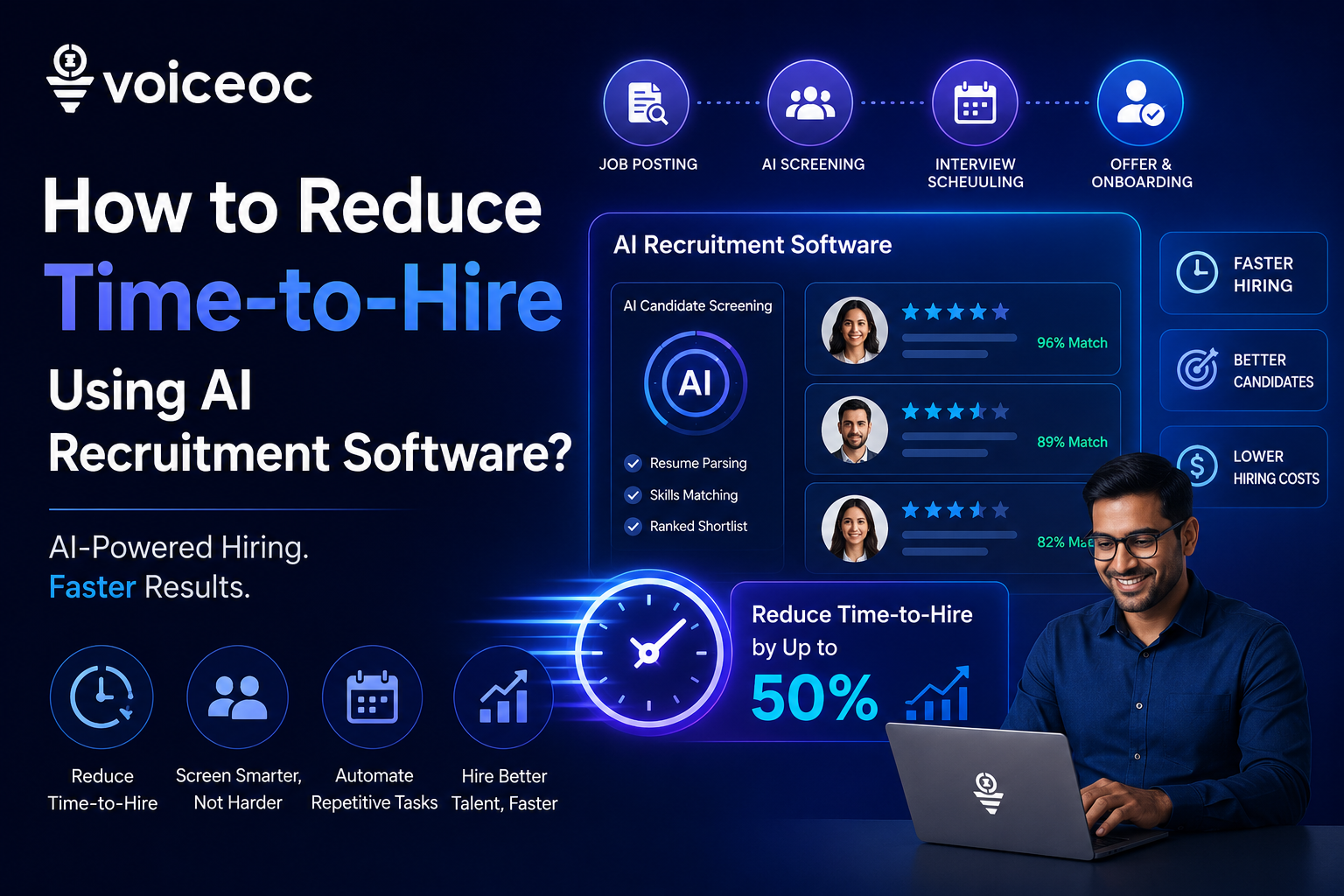
A typical AI-powered recruitment workflow could look like:
Job Requirement → Candidate Sourcing → Resume Screening → AI Pre-Screening → Candidate Ranking → Interview Scheduling → Recruiter Evaluation → Offer
When one stage is completed, the next step can be triggered automatically.
This reduces unnecessary administrative work and prevents candidates from sitting idle between stages.
7. Generate Candidate Summaries
Recruiters and hiring managers often need to review large amounts of candidate information before making a decision.
AI can summarize relevant candidate information into structured profiles covering:
- Relevant experience
- Key skills
- Qualifications
- Screening responses
- Potential gaps
- Interview information
This allows hiring teams to understand a candidate more quickly without reviewing every piece of information manually.
However, these summaries should support human decision-making rather than replace it.
8. Improve Recruiter Productivity
The goal of AI recruitment software is not simply to process more candidates.
The bigger opportunity is to allow recruiters to spend more time on high-value work.
For example, instead of spending several hours reviewing applications and coordinating interviews, recruiters can focus on:
- Candidate relationships
- Hiring-manager communication
- Interview preparation
- Employer branding
- Candidate experience
- Strategic workforce planning
- Quality-of-hire improvements
LinkedIn's research supports this shift, noting that AI can automate routine recruiting work while giving talent professionals more time for relationship building and strategic activities.
A Step-by-Step AI Recruitment Workflow With Voiceoc To Reduce Hiring Time
Organizations looking to reduce time-to-hire can structure their recruitment process around the following workflow.
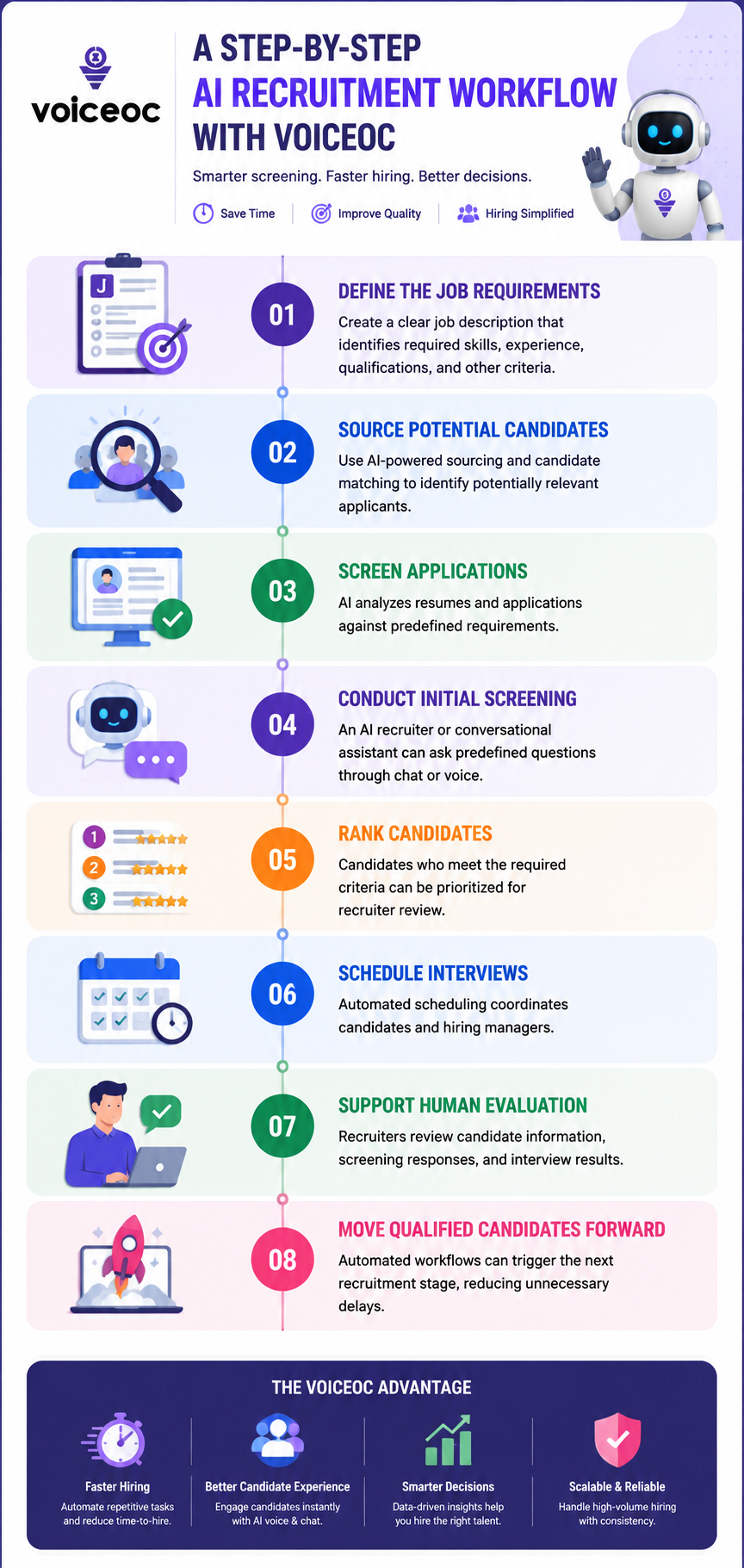
Step 1: Define the Job Requirements
Create a clear job description that identifies required skills, experience, qualifications, and other criteria.
Step 2: Source Potential Candidates
Use AI-powered sourcing and candidate matching to identify potentially relevant applicants.
Step 3: Screen Applications
AI analyzes resumes and applications against predefined requirements.
Step 4: Conduct Initial Screening
An AI recruiter or conversational assistant can ask predefined questions through chat or voice.
Step 5: Rank Candidates
Candidates who meet the required criteria can be prioritized for recruiter review.
Step 6: Schedule Interviews
Automated scheduling coordinates candidates and hiring managers.
Step 7: Support Human Evaluation
Recruiters review candidate information, screening responses, and interview results.
Step 8: Move Qualified Candidates Forward
Automated workflows can trigger the next recruitment stage, reducing unnecessary delays.
How to Measure the Impact of AI Recruitment Software?
Before implementing AI, organizations should establish a baseline.
After implementation, recruiters can compare performance across several recruitment KPIs.
Important Metrics to Track
Time-to-hire:
How long it takes to move a candidate through the hiring process.
Time-to-fill:
How long it takes to fill an open position.
Time-to-screen:
How long it takes to review and qualify applications.
Candidate response time:
How quickly candidates receive responses from the organization.
Interview scheduling time:
How long it takes to arrange an interview.
Candidate drop-off rate:
The percentage of candidates who leave the recruitment process before completion.
Cost-per-hire:
The total recruitment cost associated with hiring a candidate.
Quality of hire:
A measure of how effectively new hires perform and remain with the organization.
SHRM identifies time-to-hire/time-to-fill, source of hire, and quality of hire among the important recruitment metrics organizations should track.
Best Practices for Reducing Time-to-Hire With AI Recruitment Software
Start With Repetitive Tasks
Do not try to automate the entire recruitment process immediately.
Start with high-volume activities such as resume screening, candidate FAQs, pre-screening, scheduling, and follow-ups.
Keep Humans in the Hiring Process
AI should support recruiters rather than eliminate human judgment.
Recruiters should remain involved in evaluating candidates, interpreting context, conducting interviews, and making final hiring decisions.
Use Clear Screening Criteria
AI works more effectively when recruiters define clear job requirements and evaluation criteria.
Instead of simply asking AI to find the "best candidate," specify the skills, experience, qualifications, and other requirements that matter for the position.
Monitor Recruitment Outcomes
Track whether automation is actually improving recruitment performance.
Compare time-to-hire, candidate quality, candidate experience, and recruiter productivity before and after implementation.
Prioritize Candidate Experience
Automation should make recruitment faster without making it feel impersonal.
Candidates should receive clear communication, relevant information, and easy ways to interact with the recruitment process.
What to Look for in AI Recruitment Software
When evaluating an AI recruitment platform, organizations should consider more than resume screening.
Important capabilities include:
- AI candidate screening
- Resume parsing
- Candidate matching
- AI-powered sourcing
- Voice and text screening
- Automated interview scheduling
- Candidate engagement
- Automated follow-ups
- Recruitment workflow automation
- ATS integrations
- Analytics and reporting
- Custom screening workflows
- Human-in-the-loop controls
- Data security and privacy
- Scalability
The right platform should fit into the organization's existing recruitment process instead of creating another disconnected system.
The Future of Recruitment: AI Recruiting Agents
The next stage of recruitment technology is moving beyond individual automation features toward AI recruiting agents.
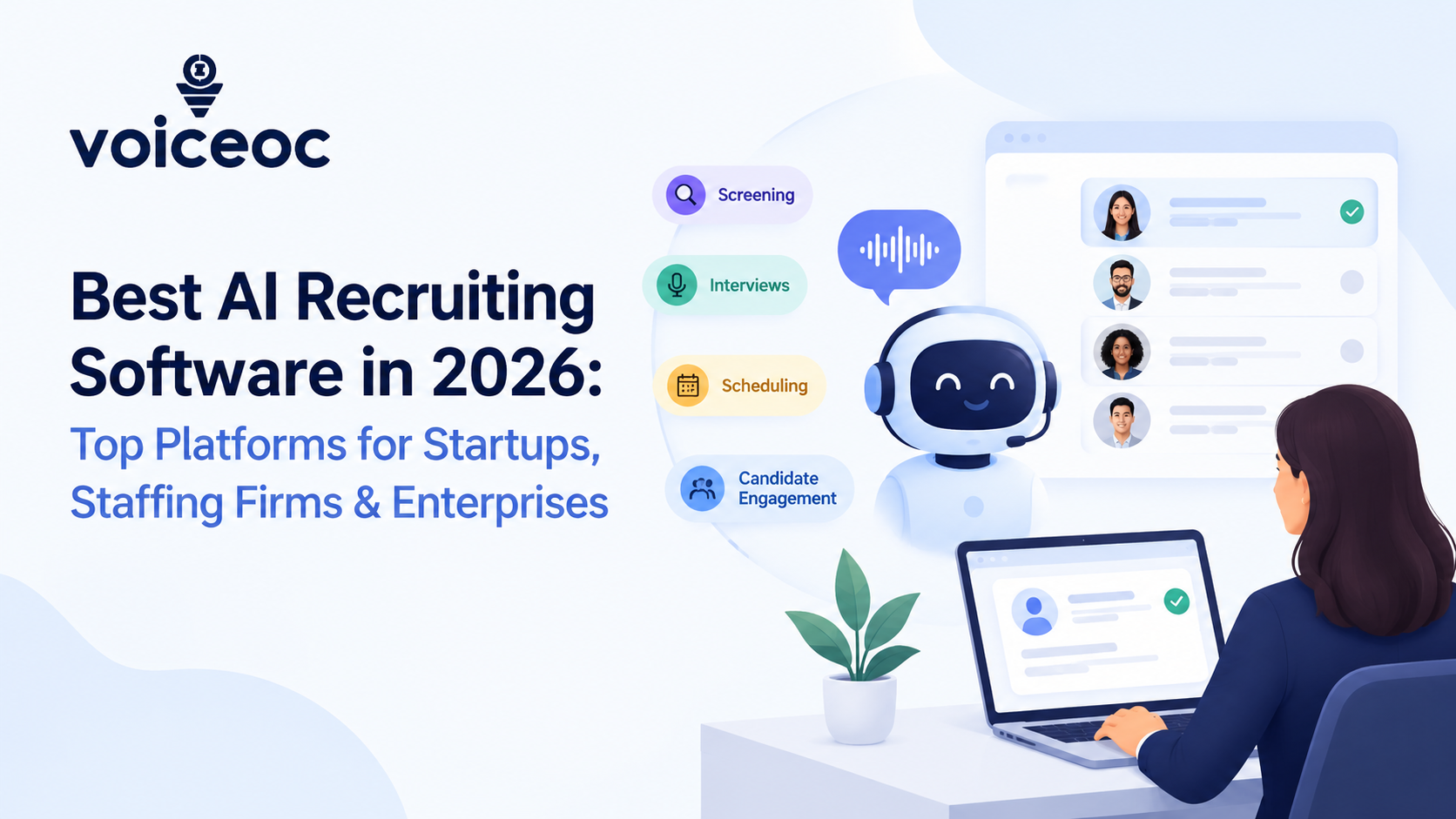
Instead of using AI only for resume screening, organizations can use specialized AI agents for different parts of the recruitment workflow.
For example:
Sourcing Agent → Screening Agent → Interview Scheduling Agent → Candidate Engagement Agent → Recruiter
This approach can create a more connected recruitment process in which different AI capabilities work together.
The objective is not to remove recruiters from recruitment. Instead, it is to allow recruiters to move away from repetitive administrative work and focus more heavily on human judgment and strategic hiring.
How Voiceoc Can Help With AI Recruitment To Reduce Their Hiring Time?
Voiceoc is expanding its AI capabilities into AI-powered recruitment screening and employee experience, helping organizations automate candidate interactions and repetitive recruitment workflows.
With AI-powered voice and text interactions, recruitment teams can automate parts of candidate engagement and initial screening while keeping recruiters involved in important hiring decisions.
Potential applications include:
- AI-powered candidate conversations
- Automated candidate screening
- Voice and text interactions
- Candidate qualification
- Automated recruitment communication
- Screening workflow automation
- Candidate information collection
- Recruiter workload reduction
By automating repetitive candidate interactions, an AI recruitment platform can help recruitment teams move qualified candidates through the hiring funnel faster.
Conclusion
Reducing hiring time for recruitment is not simply about hiring faster. It is about removing unnecessary delays while maintaining candidate quality and experience.
AI recruitment software can help organizations automate repetitive activities such as resume screening, candidate matching, pre-screening, communication, interview scheduling, and workflow management.
The opportunity is significant. SHRM's 2026 data shows that nonexecutive positions still take a median of 39 calendar days to fill, while LinkedIn reports that recruiting professionals using or experimenting with generative AI save approximately 20% of their workweek.
The most effective approach is to combine AI automation with human expertise.
AI can handle repetitive work.
Recruiters can focus on people.
And organizations can build a recruitment process that is faster, more responsive, and more scalable.