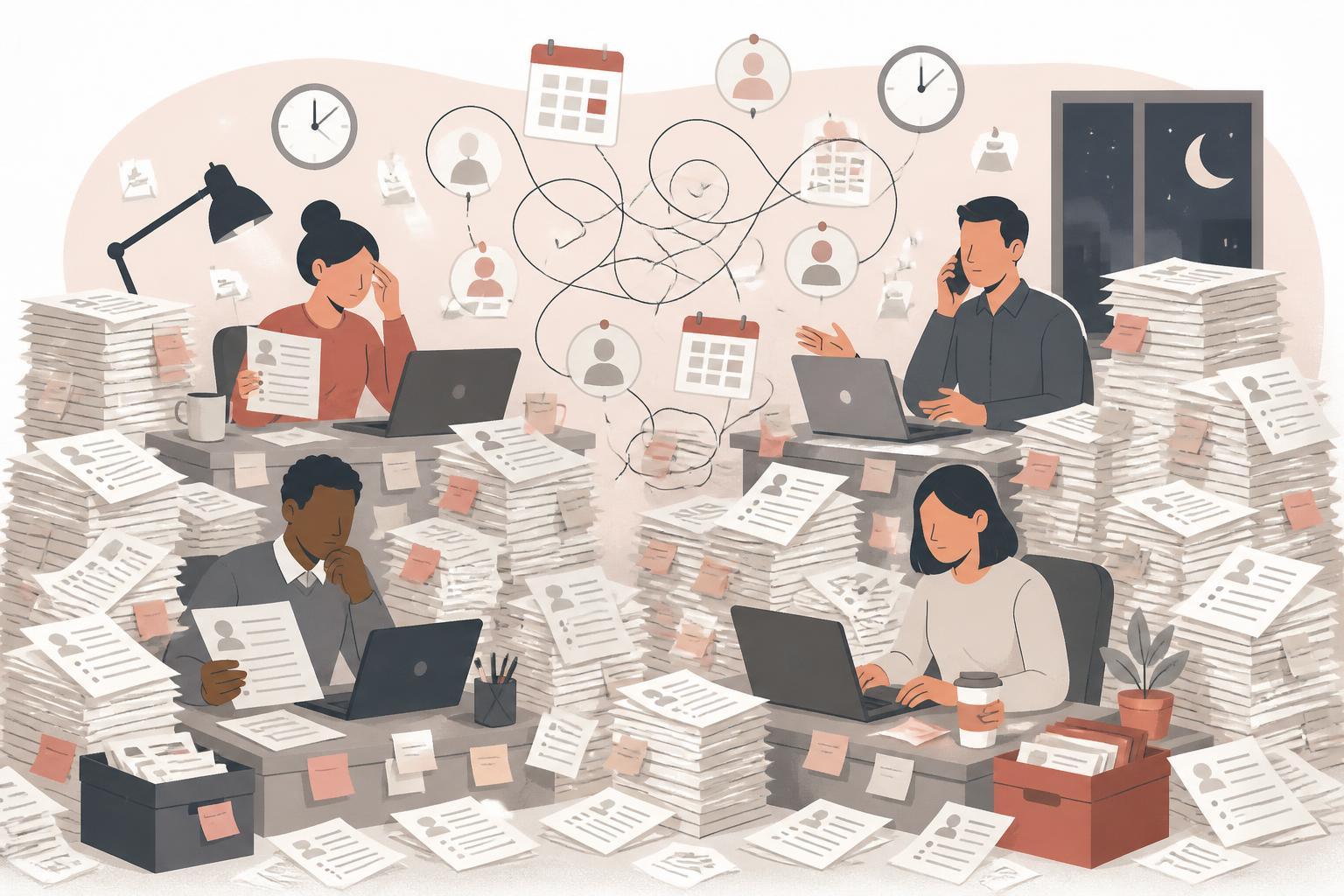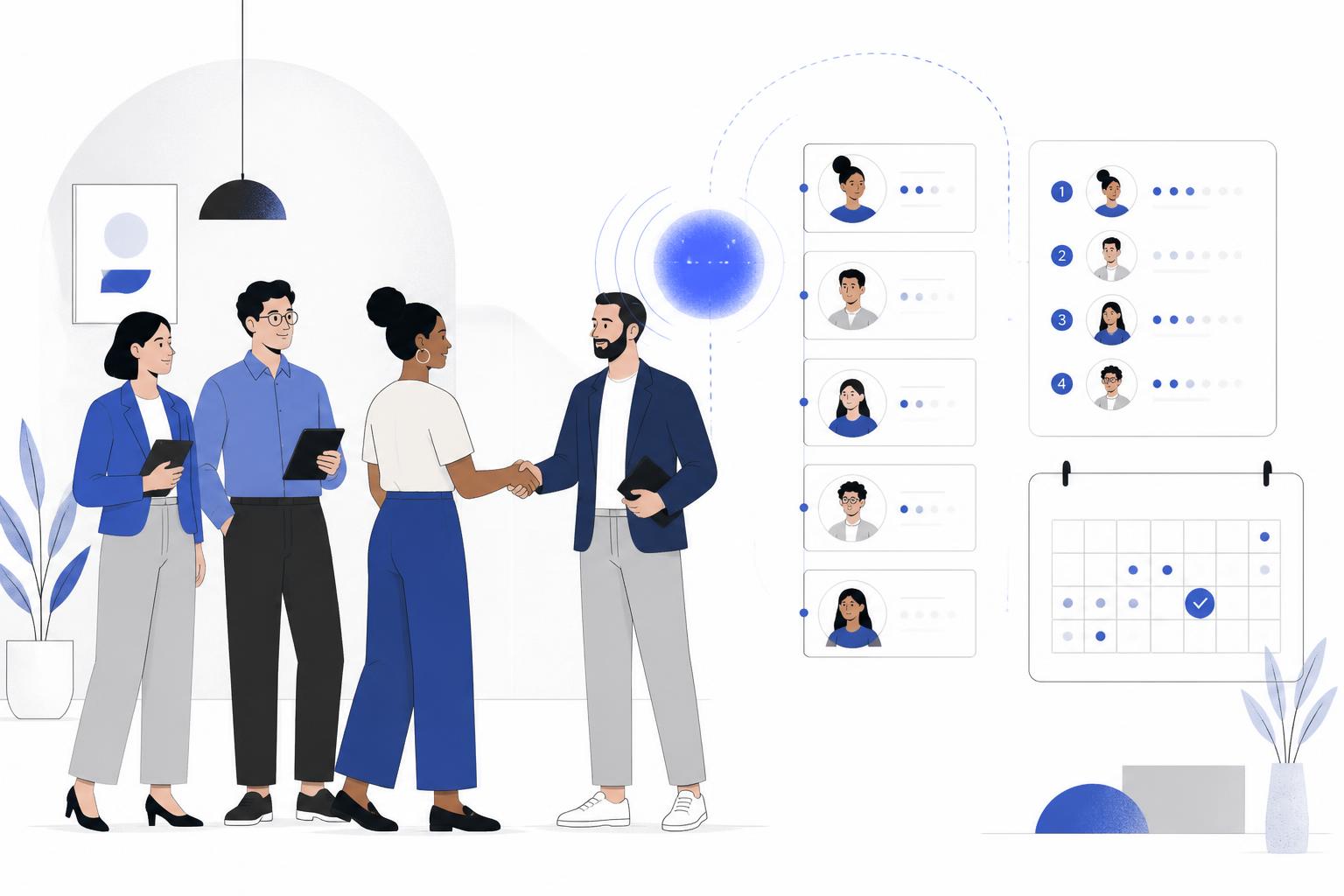
As businesses evolve rapidly in a growing market, it becomes difficult to manage the entire organisation across multiple tasks.
When it comes to the main backbone of businesses, whether big or small, it is the workforce. And to manage the entire workforce, it is important to opt for the right business strategies or direct employee engagement software that works best.
Employee Engagement does not only mean managing the employees, but also a lot more activities to focus on, that are quite complex. An employee engagement software mainly focuses on two main things: streamlining the HR admin work and making the employees more productive and active.
Although there are different HR management software solutions right now in the market, we are going to discuss the top 8 Employee Engagement Software for Enterprises in 2026.
Why Enterprises Need Modern HRMS in 2026?
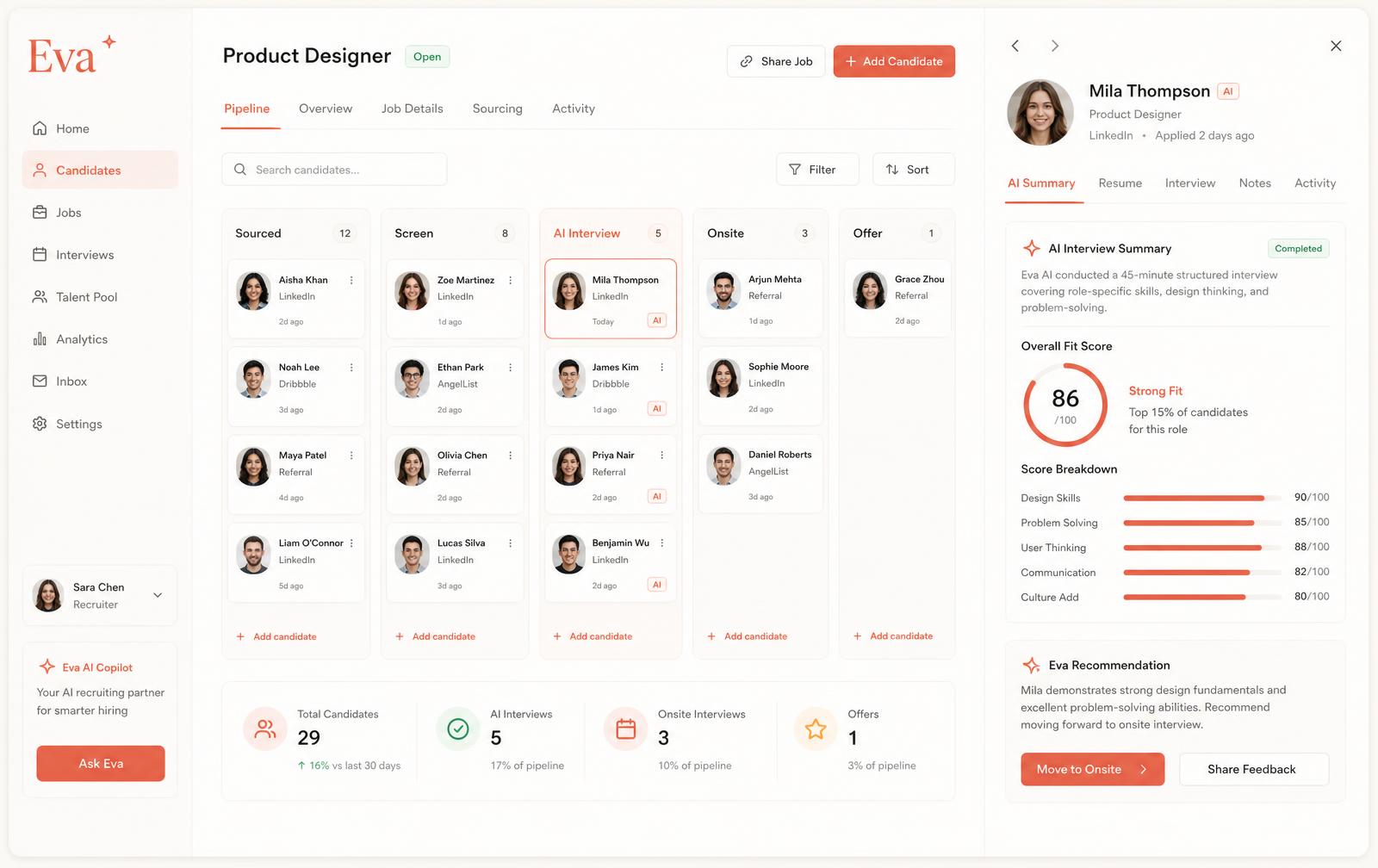
Today’s workplace is very different from what it was a few years ago. Employees expect speed, convenience, and instant support, just like they experience in apps like banking or shopping. Traditional HR systems are slow, manual, and disconnected — which is why enterprises now need modern HRMS.
Let’s break down each requirement:
1. Instant Employee Support (Not Delayed Responses)
Earlier, if an employee had a query (like leave balance or payslip), they had to:
- Email HR
- Wait for hours or even days
Now, employees expect instant answers.
A modern HRMS provides:
- Real-time responses
- Self-service portals or chat-based support
- No dependency on HR teams for small queries
This improves employee satisfaction and reduces frustration.
2. Automation of Repetitive HR Tasks
HR teams spend a lot of time on repetitive tasks like:
- Approving leave requests
- Sharing payslips
- Answering common queries
Modern HRMS automates these tasks using workflows and AI.
Result:
- HR teams save time
- Fewer human errors
- Faster execution
3. Integration Across Departments (HR, IT, Finance)
In enterprises, employee requests are not limited to HR only.
For example:
- Password reset → IT
- Salary issues → Finance
- Leave request → HR
Traditional systems handle these separately, causing delays.
Modern HRMS integrates all departments into one unified system.
This means:
- One platform for all employee needs
- Faster resolution
- Better coordination across teams
4. Improved Employee Productivity
When employees:
- Don’t get timely responses
- Have to follow up repeatedly
- Spend time on manual processes
Their productivity drops.
Modern HRMS:
- Saves time
- Reduces dependency
- Provides quick solutions
Employees can focus more on their actual work instead of administrative issues.
5. Reduced Operational Costs
Manual processes require:
- More HR staff
- More time
- More resources
Automation reduces:
- Human effort
- Errors
- Processing time
Enterprises can significantly cut operational costs while improving efficiency.
6. 24/7 Accessibility
Employees today work:
- In different time zones
- In hybrid or remote setups
They cannot depend on HR availability during office hours only.
Modern HRMS offers:
- 24/7 access
- Anytime query resolution
- Mobile-friendly platforms
Employees get support whenever they need it.
Top HRMS For Enterprises to Adopt in 2026
1. Voiceoc HRMS – AI-Powered Employee Support Automation
Best for: Enterprises looking for automation + conversational support
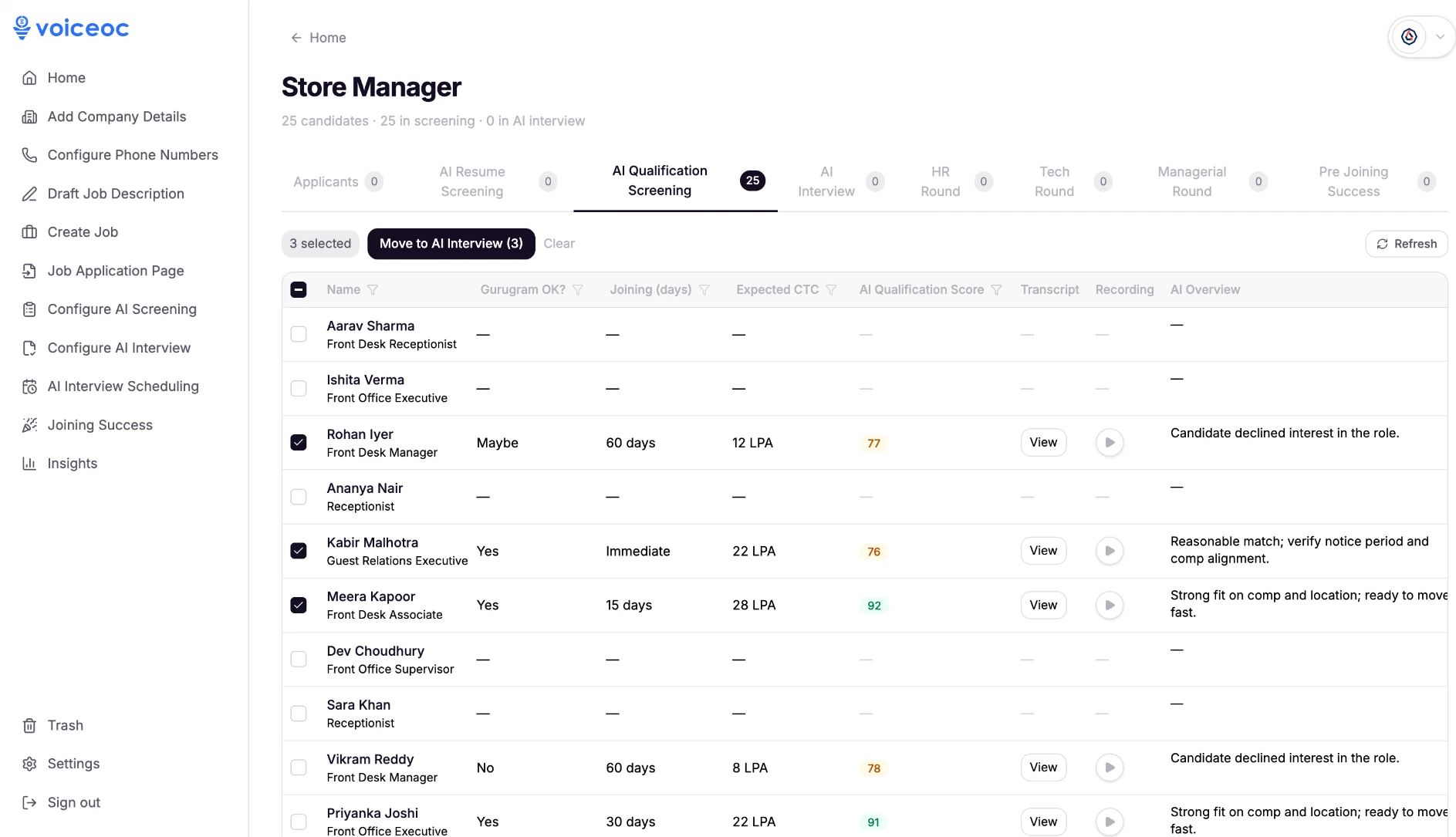
Voiceoc is redefining HRMS by combining AI-driven automation with conversational interfaces. Instead of employees navigating complex portals, they can simply use platforms they already use (like messaging tools) to get instant support.
Key Features:
- Automates HR, IT, and Finance workflows
- Instant responses to employee queries (leave requests, payslips, password resets, etc.)
- Works on familiar communication channels
- 24/7 employee assistance
- Reduces manual workload and operational costs
Why It Stands Out:
Voiceoc focuses on speed and simplicity. Employees don’t need to wait days for responses; queries are resolved in seconds, improving satisfaction and productivity.
2. Workday HCM – Enterprise-Grade Cloud HR Solution
Best for: Large enterprises with complex HR needs
Workday continues to be a leader in enterprise HR solutions with its powerful cloud-based platform.
Key Features:
- End-to-end HR management
- Advanced analytics and reporting
- Workforce planning tools
- Global compliance support
Why It Stands Out:
Workday is known for its robust scalability and data-driven insights, making it ideal for large organisations.
3. SAP SuccessFactors – Integrated HR Suite
Best for: Organisations already using the SAP ecosystem
SAP SuccessFactors offers a comprehensive HR suite covering everything from recruitment to performance management.
Key Features:
- Talent management
- Employee experience tools
- Learning and development modules
- Strong integration capabilities
Why It Stands Out:
It provides deep enterprise integration and is highly customizable for global organizations.
4. BambooHR – User-Friendly HR Software
Best for: Mid-to-large companies focusing on ease of use
BambooHR is known for its intuitive interface and employee-centric features.
Key Features:
- Employee data management
- Time-off tracking
- Performance management
- Reporting and analytics
Why It Stands Out:
It’s simple, clean, and easy to implement, perfect for companies that want quick adoption without complexity.
5. ADP Workforce Now – Payroll + HR Combined
Best for: Enterprises needing strong payroll capabilities
ADP Workforce Now combines HR management with industry-leading payroll services.
Key Features:
- Payroll automation
- Compliance management
- Talent management
- Benefits administration
Why It Stands Out:
ADP is trusted globally for its accuracy in payroll and compliance, making it a reliable choice.
6. Zoho People – Cost-Effective HRMS
Best for: Growing enterprises looking for affordability
Zoho People provides a flexible and budget-friendly HRMS solution.
Key Features:
- Employee database management
- Attendance and leave tracking
- Performance management
- Custom workflows
Why It Stands Out:
It offers great value for money with decent customisation options.
7. Oracle HCM Cloud – Advanced Enterprise HR Suite
Best for: Large global enterprises
Oracle HCM Cloud provides a complete HR solution with strong analytics and AI capabilities.
Key Features:
- AI-driven insights
- Workforce modeling
- Global HR compliance
Why It Stands Out:
Highly scalable and ideal for organizations managing a global workforce.
8. Darwinbox – Modern HRMS for Growing Enterprises
Best for: Fast-growing and digital-first companies
Darwinbox is gaining popularity for its modern UI and mobile-first approach.
Key Features:
- Employee lifecycle management
- Mobile-first experience
- AI-driven analytics
Why It Stands Out:
It focuses heavily on employee experience and usability, making it ideal for new-age enterprises.
Key Trends in HRMS for 2026
To stay competitive, enterprises should align with these emerging trends:
1. AI & Automation
Manual HR processes are being replaced by intelligent automation, reducing workload and errors.
2. Conversational HR (Chat-Based Systems)
Employees prefer interacting via chat rather than navigating dashboards, platforms like Voiceoc are leading this shift.
3. Unified Support Systems
HR, IT, and Finance are no longer separate, integrated systems improve efficiency.
4. Employee Experience Focus
Modern HRMS tools prioritize ease, speed, and personalisation.
5. 24/7 Availability
Employees expect instant support anytime, anywhere.
How to Choose the Right HRMS
When selecting an HRMS, enterprises should consider:
- Scalability: Can it grow with your company?
- Automation capabilities: Does it reduce manual work?
- Integration: Can it connect with existing tools?
- User experience: Is it easy for employees to use?
- Cost efficiency: Does it reduce operational expenses?
Final Thoughts
The future of HRMS is not just about managing employees, it's about empowering them.
In 2026, enterprises need solutions that:
- Respond instantly
- Automate intelligently
- Integrate seamlessly
- Enhance employee experience
While traditional HRMS platforms still hold value, modern solutions like Voiceoc are pushing the boundaries by transforming HR into a real-time, automated support system.
If your organisation is planning to upgrade its HR infrastructure, now is the time to invest in a system that is not just efficient, but truly future-ready.