How to Automate Recruitment Without Losing the Human Touch?
September 15, 2026
Recruitment is becoming faster, more technology-driven, and increasingly competitive. Companies are receiving hundreds or even thousands of applications for a single role, while recruiters are expected to screen candidates, conduct initial interviews, answer questions, schedule meetings, and keep applicants updated.
This is where recruitment automation can make a significant difference.
But automation also raises an important question: Can companies automate recruitment without making the hiring process feel impersonal?
The answer is yes.
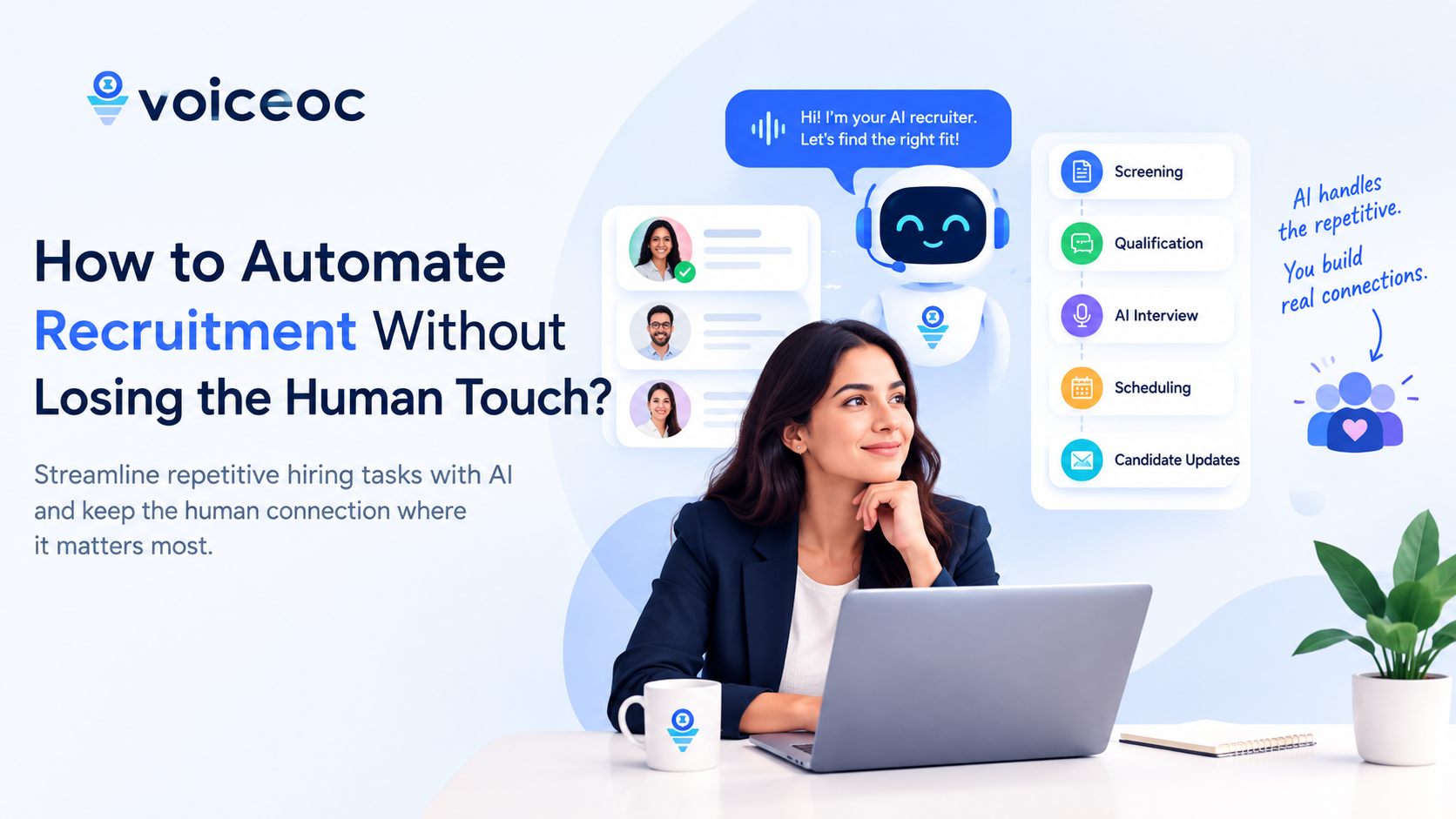
The goal of AI recruitment software should not be to remove humans from hiring. Instead, it should take repetitive work away from recruiters so they can spend more time on conversations, candidate relationships, evaluations, and important hiring decisions.
According to SHRM's 2025 research, 51% of organizations reported using AI to support recruiting activities. Resume screening, candidate searches, job description creation, and applicant communication are among the areas where organizations are already applying AI.
The future of recruiting isn't AI versus humans. It is AI working alongside humans.
Why Recruitment Needs Automation?
Recruiters spend a considerable amount of time on repetitive administrative tasks.
These can include:
Reviewing resumes and applications
Identifying candidates who meet basic requirements
Making initial qualification calls
Asking the same screening questions repeatedly
Answering common candidate questions
Coordinating interview schedules
Sending reminders and follow-ups
Updating candidates about application status
While these activities are necessary, they do not always require a recruiter's full attention.
At the same time, recruiters need time for work that depends on human judgment, such as understanding candidate motivations, evaluating communication skills, building relationships, working with hiring managers, and discussing career opportunities.
This is where recruitment process automation becomes valuable.
Instead of automating the entire hiring process, companies can automate repetitive stages and allow recruiters to focus on the parts of recruitment where human interaction matters most.
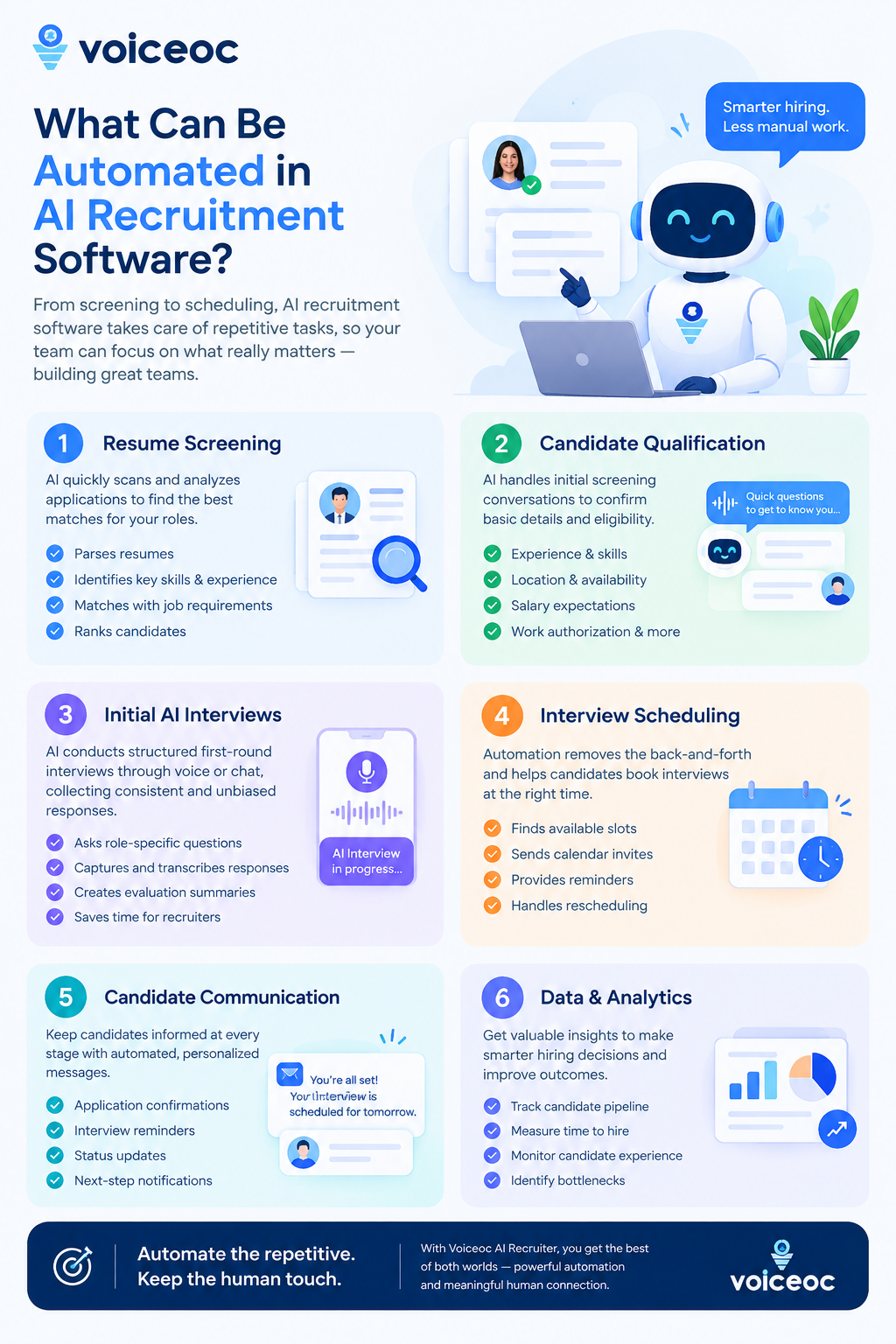
What Can Be Automated in Recruitment?
Modern AI recruiting platforms can support several stages of the hiring workflow.
1. Resume Screening
Manually reviewing hundreds or thousands of resumes can quickly become a bottleneck.
AI-powered candidate screening can analyze resumes based on predefined job requirements. It can identify relevant:
Skills
Work experience
Education
Certifications
Job titles
Industry experience
Other role-specific qualifications
Instead of manually reviewing every application, recruiters can use AI to identify candidates who are more closely aligned with the role.
SHRM reported that 44% of organizations using AI in recruiting use it for resume screening.
The recruiter still makes the final decision, but AI reduces the amount of repetitive review required.
2. Candidate Qualification
After resume screening, recruiters often need to contact candidates to confirm basic information.
An AI recruiter can automate these initial qualification conversations.
For example, candidates may be asked about:
Relevant experience
Location
Availability
Salary expectations
Required skills
Shift preferences
Notice period
Work authorization
This allows recruiters to focus their time on candidates who meet the initial criteria.
3. Initial AI Interviews
First-round interviews can involve many of the same questions for every candidate.
AI interview software can conduct structured initial interviews and collect responses using voice or chat.
For example, an AI recruiter could ask a customer service candidate about their experience handling difficult customers, working under pressure, or managing multiple conversations.
The responses can then be organized for recruiter review.
This can help create a more consistent first-stage screening process while allowing recruiters to spend more time on deeper interviews.
4. Interview Scheduling
Interview scheduling is another area where recruitment automation can save time.
Instead of sending multiple emails to find a suitable time, automated recruitment software can help candidates select available slots and receive confirmations and reminders.
Automation can also support:
Rescheduling
Interview reminders
Calendar coordination
Candidate notifications
Interview status updates
The result is less administrative work for recruiters and a smoother experience for candidates.
5. Candidate Communication
One of the biggest problems in recruitment is the communication gap between candidates and employers.
Candidates may apply for a position and then wait days or weeks without knowing what happens next.
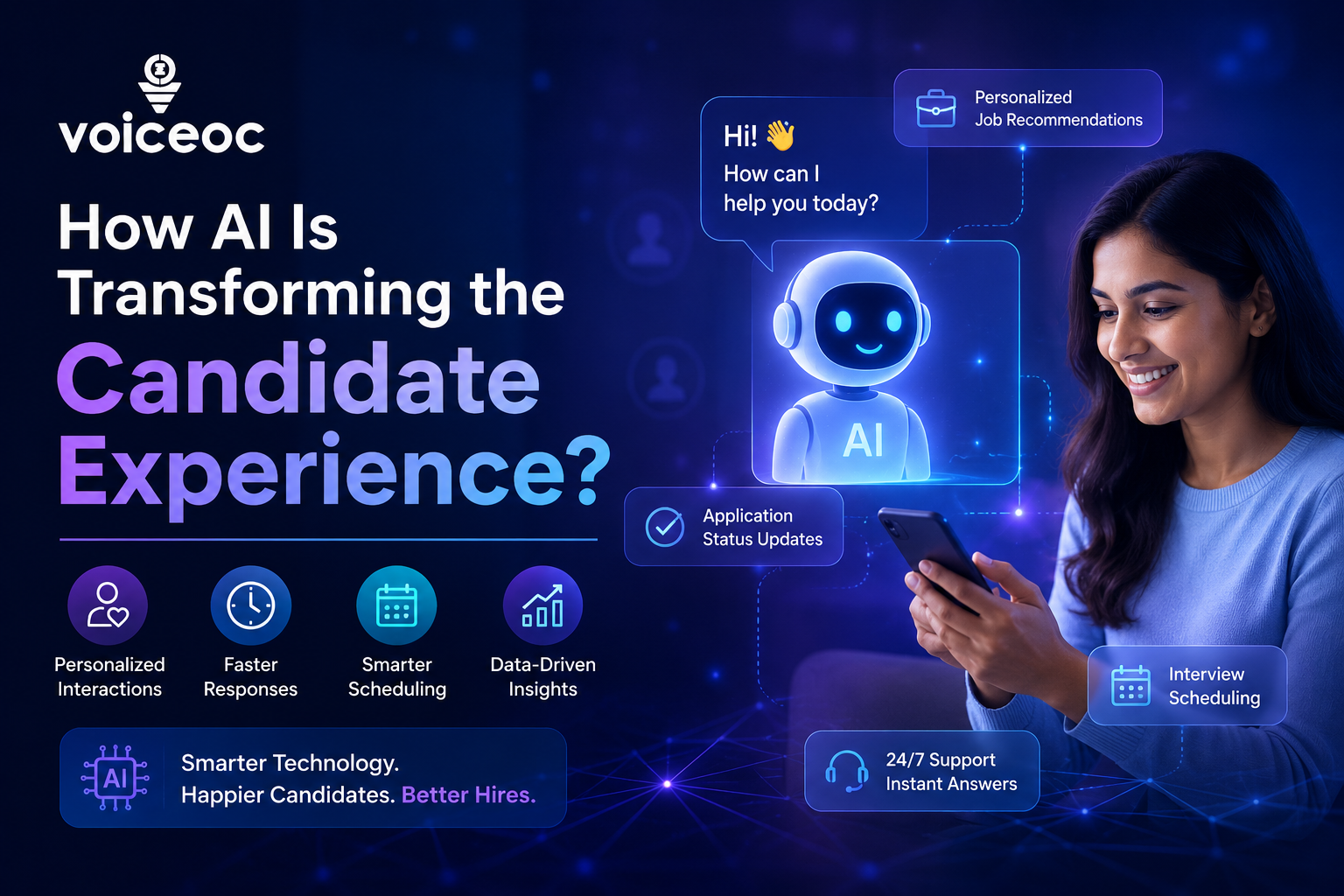
AI-powered recruitment workflows can provide faster communication through automated messages, chat, or voice interactions.
Candidates can receive:
Application confirmations
Screening instructions
Interview reminders
Scheduling information
Next-step notifications
Status updates
Automation doesn't have to make recruitment less personal. When used correctly, it can actually make recruitment more responsive.
What Should Not Be Fully Automated?
The purpose of recruitment automation should not be to automate every interaction.
Some parts of hiring require human judgment.
Final Hiring Decisions
AI can organize candidate information and provide recommendations, but recruiters and hiring managers should remain involved in important hiring decisions.
Sensitive Conversations
Candidates may have questions about compensation, career progression, company culture, job responsibilities, or personal circumstances that require a human response.
Relationship Building
Recruiters play an important role in selling the opportunity and building trust with candidates.
A candidate deciding between multiple job offers may want to speak with a real person who can explain why the organization is a good fit.
Complex Candidate Evaluation
Not every candidate can be evaluated through predefined criteria.
Experience, communication style, motivation, potential, and team dynamics can require context that human recruiters are better positioned to understand.
This is why the strongest AI recruiting strategy is not “AI replaces recruiters.”
It is that AI handles repetitive work while recruiters handle human decisions.
How to Keep the Human Touch in Automated Recruitment?
Companies can use several strategies to make recruitment automation more human-centered.
Keep Recruiters in the Loop
Create clear points in the recruitment workflow where candidates can move from an AI interaction to a human recruiter.
Personalize Candidate Communication
Automated messages should still be relevant to the candidate. Use information from their application, role, interview stage, or previous interactions whenever appropriate.
Give Candidates Easy Access to Humans
Candidates should know how to contact a recruiter when they have questions that require human assistance.
Use AI for First-Level Screening
AI is particularly useful for repetitive screening and qualification. Human recruiters can then focus on shortlisted candidates.
Be Transparent
Companies should consider clearly communicating when AI is being used during recruitment and what role it plays in the process.
Measure Candidate Experience
Recruitment automation should be measured by more than time saved.
Companies should also monitor:
Candidate response rates
Interview completion rates
Candidate drop-off
Time to response
Time to hire
Candidate satisfaction
Recruiter productivity
The objective is to create a faster process without sacrificing candidate trust.
How Voiceoc AI Recruiter Combines AI With Human Recruitment?
Voiceoc AI Recruiter is designed to help recruitment teams automate repetitive hiring activities while keeping recruiters involved throughout the process.
Instead of replacing recruiters, Voiceoc AI Recruiter can act as an extension of the recruitment team.
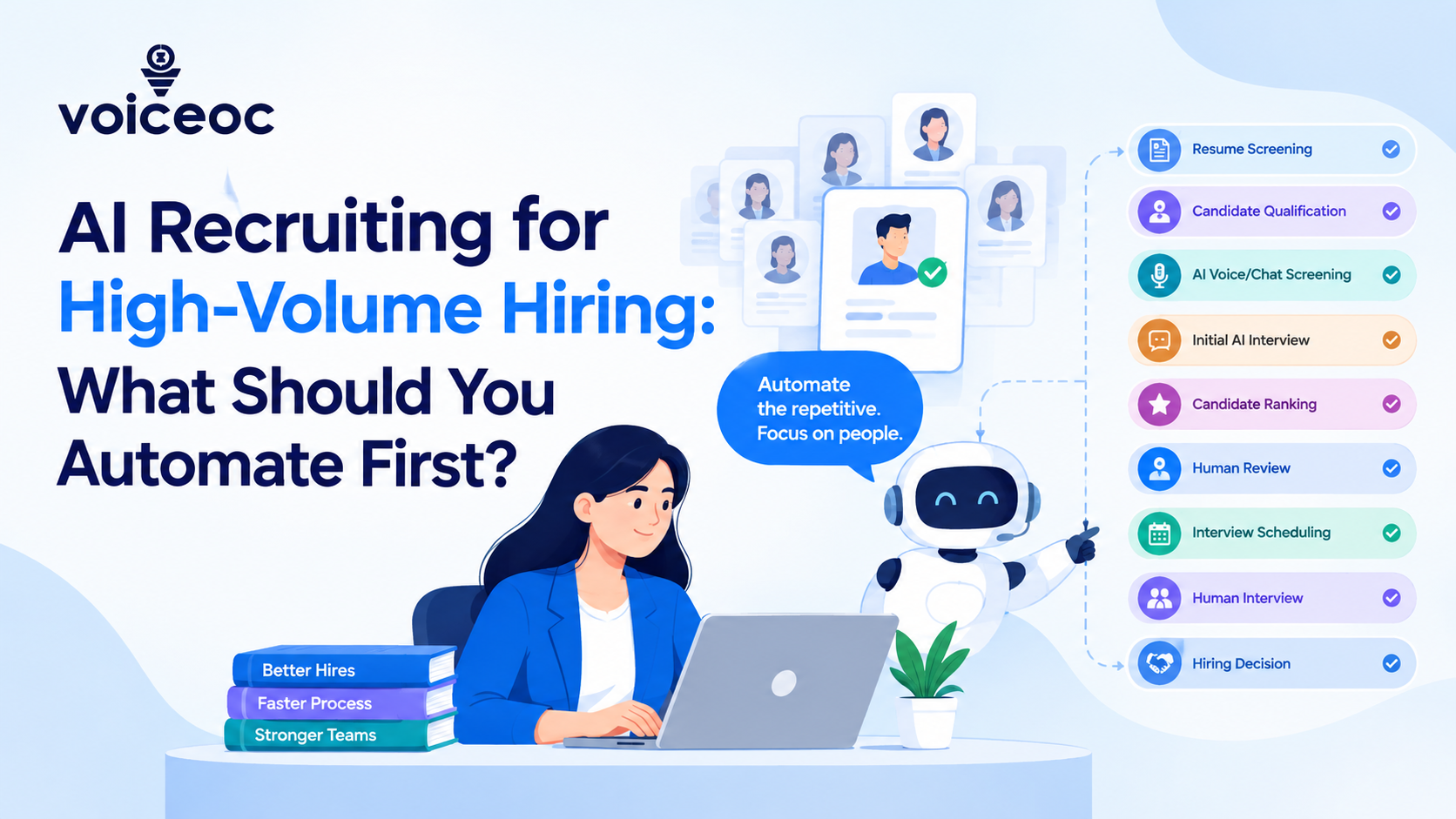
The workflow can include:
Resume Screening → Candidate Qualification → AI Voice/Chat Screening → Initial AI Interview → Candidate Ranking → Human Review → Interview Scheduling → Human Interview → Hiring Decision
This approach allows recruiters to automate time-consuming stages while maintaining control over important decisions.
AI-Powered Candidate Screening
Voiceoc AI Recruiter can help recruitment teams process applications and identify candidates based on predefined requirements.
AI Voice and Chat Conversations
Candidates can interact with an AI recruiter through conversational channels, allowing initial qualification questions to be handled without requiring recruiters to make every screening call manually.
Structured AI Interviews
For suitable roles, AI can conduct structured first-round conversations and collect candidate responses for recruiter review.
Automated Interview Scheduling
Once candidates move forward, recruitment workflow automation can reduce the back-and-forth involved in scheduling interviews.
Continuous Candidate Engagement
Automated communication can help candidates understand what happens next instead of leaving them waiting for updates.
This creates a model where AI manages the repetitive workload and recruiters manage the human relationship.
AI Recruitment vs. Traditional Recruitment
Traditional recruiting often requires recruiters to manually move candidates through multiple stages.
They review applications, make screening calls, conduct initial interviews, coordinate schedules, send follow-ups, and update candidate records.
With AI recruitment software, many of these repetitive tasks can be automated.
The difference is not that recruiters become unnecessary.
The difference is that recruiters can spend less time on administrative work and more time with the candidates who require their attention.
For high-volume hiring, this distinction becomes even more important.
When hundreds or thousands of candidates enter the recruitment funnel, adding more manual work can quickly overwhelm a recruiting team. Recruitment automation software can help teams handle larger volumes without making every part of the process manual.
The Future of Recruitment Is Human + AI
AI is changing recruitment, but the strongest hiring processes will not eliminate human interaction.
According to LinkedIn's 2025 Future of Recruiting research, recruiting professionals using generative AI reported saving approximately 20% of their workweek. The same research highlights the increasing importance of human skills such as relationship building as AI takes on more routine work.
This points to an important shift.
Recruiters don't necessarily need to spend more time working.
They need to spend more time on the right work.
AI can analyze applications, conduct initial qualification conversations, handle repetitive questions, support first-round interviews, and coordinate scheduling.
Recruiters can then focus on understanding candidates, evaluating potential, building relationships, collaborating with hiring managers, and making better hiring decisions.
That is what human-centered recruitment automation should look like.
Conclusion
Automating recruitment does not mean removing humans from the hiring process.
It means removing unnecessary manual work so recruiters can focus on what technology cannot replace easily: judgment, empathy, relationships, and meaningful conversations.
The best approach is to automate repetitive tasks while keeping humans involved at the moments that matter.
With Voiceoc AI Recruiter, recruitment teams can build an AI-powered hiring workflow that supports candidate screening, qualification, initial interviews, scheduling, and engagement while allowing recruiters to remain in control of the hiring process.
The future of recruitment isn't about choosing between AI and human recruiters.
It's about giving AI the repetitive work and giving recruiters more time to be human.
Connect with Voiceoc today!
Thank you! Your submission has been received!
Oops! Something went wrong while submitting the form.
Topics:
Read More
September 17, 2026
AI Recruiting for High-Volume Hiring: What Should You Automate First?