Every day, thousands of patients miss their appointments. Phones ring endlessly with no one to answer. Doctors spend hours on documentation instead of patient care. Staff burn out. Costs spiral. And patients, frustrated and underserved, simply walk away.
This is not a story from a struggling rural clinic. This is the daily reality for hospitals and healthcare providers across the world in 2026.
Patient expectations have never been higher. People want fast answers, 24/7 access, personalized communication, and frictionless scheduling. Meanwhile, healthcare systems are grappling with some of the worst staffing crises in history. The global healthcare workforce shortage is projected to reach 11 million workers by 2030, according to the World Health Organization.
The pressure is immense. But so is the opportunity.
Artificial intelligence, specifically conversational AI and voice AI, is emerging as one of the most transformative forces in modern healthcare. And for good reason: 85% of healthcare leaders are already planning to adopt AI solutions in 2025, recognizing that AI isn't just a nice-to-have; it's a survival strategy.
In this blog, we'll break down the real challenges of implementing AI in healthcare, how AI is actively solving those challenges, and why platforms like Voiceoc AI are leading the charge in redefining patient engagement and clinical efficiency.
Key Challenges in AI Healthcare Adoption
Despite enormous enthusiasm, AI adoption in healthcare doesn't happen without friction. Understanding these barriers is the first step toward overcoming them.
1. Data Privacy and Security Concerns
Healthcare data is among the most sensitive information in existence. Patient records, diagnoses, prescriptions, and personal identifiers are governed by strict regulations like HIPAA in the United States and GDPR in Europe. Any AI system operating in healthcare must be designed with compliance baked into its core, not added as an afterthought.
The stakes are enormous. The average cost of a healthcare data breach is $5.5 million, making security failures not just a legal problem, but a financial catastrophe. Healthcare organizations fear that deploying AI tools, especially those powered by third-party vendors, could create new vulnerabilities.
This is why HIPAA-compliant architecture, end-to-end data encryption, and strict access controls are non-negotiable requirements for any AI healthcare solution.
2. Lack of Patient Trust in AI
Trust is the foundation of healthcare. And when it comes to AI, many patients remain skeptical. Studies suggest that only approximately 48% of patients fully trust AI-driven healthcare decisions, particularly regarding diagnosis and clinical recommendations.
This trust gap means that AI in healthcare cannot be deployed as a black-box replacement for human judgment. It must be transparent, explainable, and complementary to human care, not a substitute for it.
3. Integration with Legacy Systems
Most hospitals and clinics run on electronic health record (EHR) or electronic medical record (EMR) systems that were built decades ago. These legacy platforms were not designed to communicate with modern AI tools, creating massive integration headaches.
Getting an AI-powered scheduling bot to sync with an aging EMR system, or having a voice AI agent pull up a patient's history in real-time, requires sophisticated API bridges and technical expertise that many healthcare IT teams simply don't have in-house.
Without seamless integration, AI becomes an island, useful in theory, but disconnected from the workflows that actually matter.
4. High Implementation Costs
For small and mid-sized healthcare practices, the upfront cost of AI implementation can be daunting. Custom AI development, staff retraining, system integration, and ongoing maintenance all carry significant price tags.
This financial barrier has historically meant that AI tools were accessible only to large hospital networks with deep pockets, leaving the majority of providers behind.
5. Workflow Disruption and Staff Resistance
Even when the technology works perfectly, people often don't. Staff who are accustomed to existing workflows may resist new AI tools, especially if they perceive them as threats to their jobs or as complicated systems that add to their burden rather than reduce it.
Change management, the human side of digital transformation, is one of the most underestimated challenges in AI healthcare deployment. Without proper onboarding, training, and cultural buy-in, even the best AI systems collect digital dust.
How AI is Transforming Healthcare Experiences?
Despite the challenges, the outcomes when AI is implemented well are nothing short of remarkable. Here's how AI is actively reshaping healthcare delivery.
Personalized Patient Engagement
Modern patients don't want to be treated as case numbers. They want communication that feels relevant, timely, and personal. AI makes this possible at scale.
AI-driven communication platforms can send appointment reminders in a patient's preferred language, follow up on post-visit care instructions, deliver personalized health tips based on a patient's history, and proactively reach out to patients due for screenings or check-ups — all without human intervention.
Early adopters of conversational AI in healthcare are already seeing patient engagement rates exceed 90%, a dramatic improvement over traditional outreach methods like mass emails or generic robocalls.
Multilingual support is another game-changer. In diverse communities where patients may not speak the dominant language fluently, AI can communicate in dozens of languages, breaking down barriers that have long limited healthcare access.
Automation of Administrative Tasks
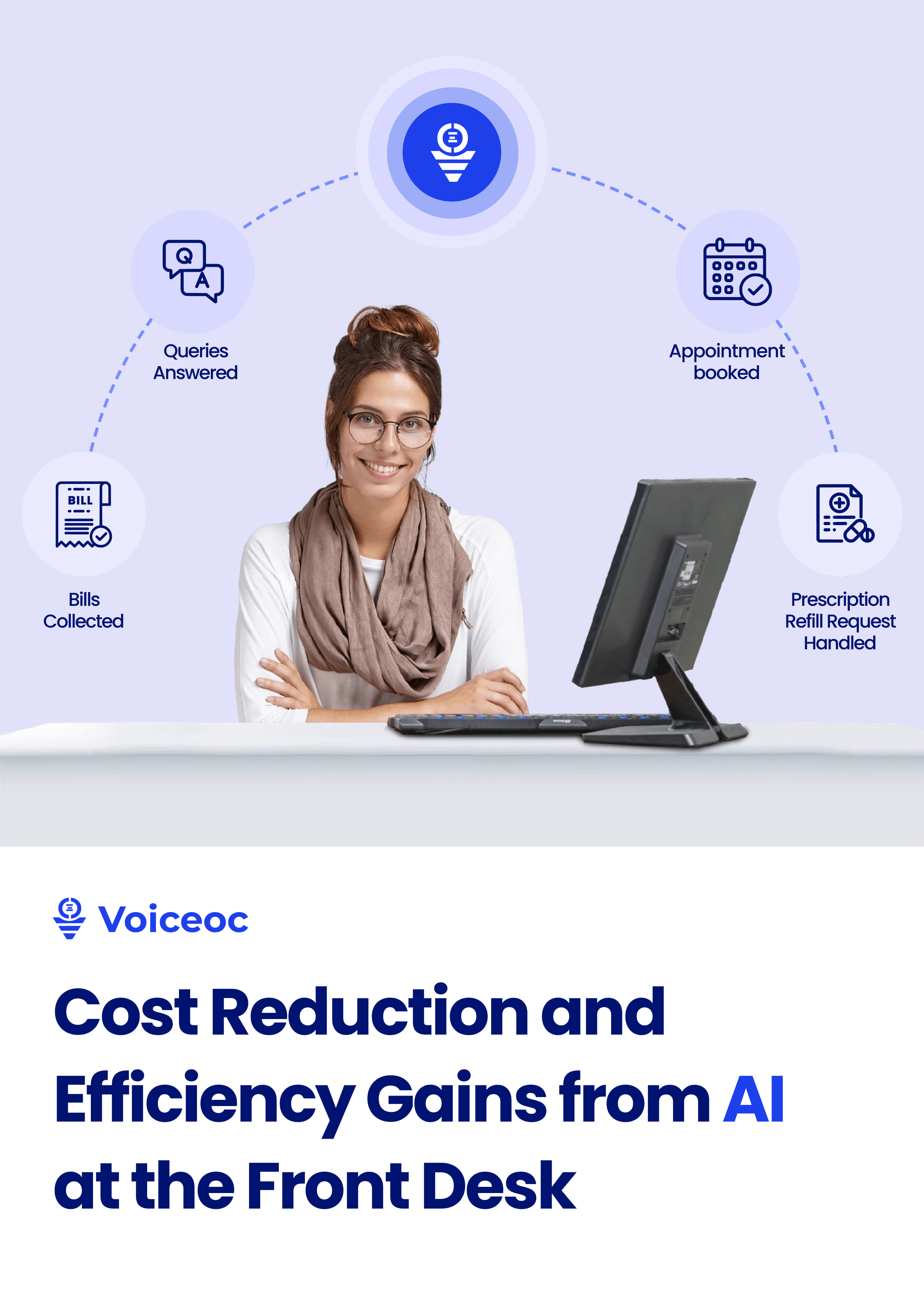
One of the biggest drains on healthcare resources is administrative work: scheduling, rescheduling, cancellations, insurance verification, bill reminders, and call handling. These tasks are repetitive, time-consuming, and don't require clinical judgment, making them perfect candidates for automation.
AI-powered systems can now handle up to 85% of inbound call volume without human intervention, routing complex queries to staff while handling routine tasks automatically. This translates directly into:
- Fewer missed calls and unanswered messages
- Dramatically reduced wait times for patients
- Staff freed up to focus on higher-value, in-person care
Beyond call deflection, AI reduces overall documentation workload by 30 to 50%, giving clinicians back hours every week that they can spend with patients rather than paperwork.
Faster Diagnosis and Clinical Support
AI diagnostic tools are not replacing doctors; they're making doctors better. Computer vision and machine learning models can now analyze medical images (X-rays, MRIs, pathology slides) with remarkable accuracy.
In fact, AI-powered diagnostics have reached accuracy rates of 94%, compared to 88% for human practitioners alone in certain imaging contexts. When AI and human expertise work together, diagnostic accuracy improves even further.
AI also assists with clinical decision support: alerting physicians to potential drug interactions, flagging abnormal test results, and surfacing relevant research, all in real-time, at the point of care.
Improved Access to Care
Geography has long been one of the biggest inequities in healthcare. Patients in rural or underserved areas often travel hours for routine care, or go without it entirely.
AI-powered telemedicine platforms, virtual health assistants, and remote monitoring tools are changing this equation. A patient in a remote village can now consult with a specialist through an AI-assisted telehealth platform, receive AI-guided triage, and have their follow-up managed automatically, without setting foot in a hospital.
The Rise of Conversational AI and Voice AI in Healthcare
Among all the AI technologies reshaping healthcare, conversational AI and voice AI deserve special attention, because they transform the most fundamental aspect of healthcare: communication.
Chatbots vs. Voice AI: What's the Difference?
Healthcare chatbots are text-based interfaces that patients interact with through apps, websites, or messaging platforms. They handle queries like appointment booking, symptom checking, and FAQ responses.
Voice AI agents take this a step further, enabling real, spoken conversations — much like speaking with a receptionist or nurse. Voice AI can handle phone calls, understand natural language, respond intelligently, and take action (like booking an appointment or sending a follow-up), all within a single conversation.
For healthcare, voice AI is particularly powerful because it meets patients where they already are: on the phone. No app downloads. No typing. Just a natural, human-like conversation.
The Patient Engagement Lifecycle
Conversational AI can support patients throughout their entire healthcare journey:
Before the visit: Appointment scheduling, insurance verification, pre-visit instructions, and reminders to reduce no-shows.
During care: Check-in assistance, symptom intake forms, and real-time FAQ support.
After the visit: Post-care instructions, medication reminders, follow-up scheduling, satisfaction surveys.
This end-to-end engagement model means AI isn't just a point solution, it's a continuous relationship between patient and provider. And the numbers prove it: conversational AI can improve patient engagement rates by over 90% compared to traditional outreach.
The global conversational AI market, valued at billions today, is projected to reach $48.9 billion by 2030, reflecting just how central this technology is becoming to industries like healthcare.
Despite this, only 19% of healthcare practices currently use AI chatbots or voice agents, creating an enormous competitive opportunity for providers willing to adopt early.
How Voiceoc AI Solves These Challenges?
Voiceoc is purpose-built for healthcare. Unlike generic AI platforms, Voiceoc has been designed from the ground up to address the specific challenges that healthcare providers face, security, integration, patient trust, and operational efficiency.
Smart Appointment Scheduling That Eliminates No-Shows
No-shows are one of the costliest problems in healthcare, wasting clinical time, reducing revenue, and disrupting care continuity. Voiceoc's AI-powered scheduling system proactively reaches out to patients with reminders via their preferred communication channel, offers easy rescheduling options, and flags high-risk no-show patients for additional follow-up.
The result: significantly reduced no-show rates and a more predictable, efficient schedule for your clinical team.
AI Voice Agents for 24/7 Patient Support
Voiceoc's voice AI agents handle inbound patient calls around the clock, even at 2 AM on a Sunday. Whether a patient needs to reschedule an appointment, ask about medications, or get directions to the clinic, Voiceoc handles it instantly, without putting anyone on hold.
This isn't a clunky IVR system with endless menu options. It's a natural, conversational AI that understands context, responds intelligently, and knows when to escalate to a human team member.
Seamless EHR/EMR Integration
Voiceoc integrates directly with leading EHR and EMR systems, meaning your existing workflows aren't disrupted; they're enhanced. Patient data stays synchronized. Appointments booked by the AI appear directly in your scheduling system. No double entry. No data silos.
This integration capability is one of the most critical differentiators for healthcare providers evaluating AI platforms, and Voiceoc delivers it out of the box.
HIPAA-Compliant and Fully Secure
Every aspect of Voiceoc's platform is built to HIPAA standards. Data is encrypted in transit and at rest. Access controls ensure that patient information is only visible to authorized personnel. Audit logs track every interaction.
For patients, this means they can trust that their sensitive health information is protected. For providers, it means deploying Voiceoc doesn't introduce compliance risk, it reduces it.
Personalized Patient Communication at Scale
Voiceoc goes beyond generic messaging. Using patient data and interaction history, it delivers communications that feel relevant and personal, the right message, through the right channel, at the right time.
From post-discharge follow-ups to chronic disease management reminders to multilingual outreach for diverse patient populations, Voiceoc acts as an AI-powered virtual receptionist and patient engagement platform that never sleeps, never burns out, and never loses patience.
Real Impact — What AI Delivers in Practice
The numbers are compelling, but the real story is in the outcomes that healthcare organizations are experiencing when they implement AI strategically.
Reduced no-show rates: Providers using AI-powered reminder and outreach systems report dramatic reductions in appointment no-shows, with some seeing decreases of 30–50% compared to manual outreach methods.
Improved patient satisfaction: When patients get fast responses, feel heard, and receive timely follow-up, satisfaction scores improve. AI-powered engagement platforms consistently lift Net Promoter Scores (NPS) across healthcare organizations.
Lower operational costs: By automating routine administrative tasks, healthcare organizations reduce the need for large front-desk and call-center staff, redirecting budget toward clinical care. AI can reduce administrative workload by 30 to 50%, delivering measurable cost savings.
Better staff productivity and morale: When administrative burden drops, clinical staff can focus on what they are trained to do: caring for patients. This reduction in burnout-inducing busywork has a direct impact on staff retention — a critical issue in a sector facing an 11 million worker shortage by 2030.
Faster response times: Patients no longer wait on hold or hear a busy signal. AI handles inquiries instantly, improving the perception of care even before the patient walks through the door.
The Future of AI in Healthcare
We are still in the early chapters of AI's impact on healthcare. The coming decade will see capabilities that seem futuristic today become standard practice.
Predictive and Preventive Care
Future AI systems will move from reactive to proactive, identifying patients at risk of deterioration before symptoms become emergencies. By analyzing patterns in patient data, wearables, and environmental factors, AI will flag at-risk individuals for early intervention, shifting healthcare from treatment to prevention.
AI and Human Collaboration — Not Competition
The most important thing to understand about the future of AI in healthcare is this: AI is not replacing doctors, nurses, or care coordinators. It is making them better.
The human skills at the heart of great healthcare, empathy, judgment, intuition, trust, cannot be automated. What AI can do is remove the administrative friction that prevents healthcare professionals from exercising those skills fully.
The future is a collaboration model: AI handles the repeatable, the routine, and the data-heavy; humans handle the complex, the emotional, and the clinical.
Voice-First Healthcare Systems
Voice is increasingly becoming the dominant interface for AI interaction, in healthcare and beyond. As voice AI becomes more sophisticated, it will power not just phone-based patient interactions but also in-clinic check-ins, discharge instructions, medication guidance, and real-time clinical support for providers.
Platforms like Voiceoc are already laying the groundwork for this voice-first future.
Conclusion: The Early Movers Will Win
AI in healthcare is not a future trend; it is a present reality. And the gap between early adopters and laggards is already widening.
Organizations that deploy AI today are reducing costs, improving patient satisfaction, retaining staff, and building competitive moats that will be difficult to close. Those who wait are falling further behind with every passing month.
The challenges are real: data privacy, integration complexity, implementation costs, and change management. But they are solvable. And platforms like Voiceoc AI exist precisely to solve them, offering a purpose-built, HIPAA-compliant, deeply integrated AI solution that transforms patient engagement without disrupting clinical workflows.
AI is not coming for healthcare. It's already here. The question is whether your organization is going to lead or catch up.
Ready to see how Voiceoc can transform patient experience at your organization?
Schedule a 30-min free consultation with Voiceoc AI Health Experts!
Frequently Asked Questions (FAQ)
- What are the biggest challenges of implementing AI in hospitals?
The most common challenges include data privacy and HIPAA compliance concerns, integration with legacy EHR/EMR systems, high upfront implementation costs, patient trust barriers, and staff resistance to workflow changes. Platforms like Voiceoc are designed to address each of these challenges directly.
- How does voice AI help reduce appointment no-shows?
Voice AI proactively contacts patients before their scheduled appointments via phone or messaging, delivers personalized reminders, and offers instant rescheduling options when needed. This automated outreach is far more consistent and scalable than manual follow-up, significantly reducing no-show rates.
- Is AI in healthcare HIPAA compliant?
AI tools can be built to be fully HIPAA compliant, but not all are. It's essential to evaluate any AI healthcare platform on its data encryption standards, access control policies, audit logging capabilities, and the availability of a Business Associate Agreement (BAA). Voiceoc is built to HIPAA standards.
- How does Voiceoc integrate with existing EHR systems?
Voiceoc is designed to integrate seamlessly with leading EHR and EMR platforms through standard API connections. This means patient data stays synchronized, appointments appear directly in existing scheduling systems, and clinical staff experiences minimal workflow disruption.


.png)


.svg)
.svg)