The Role of AI in Employee Retention Strategies: How Intelligent HR is Redefining Workforce Loyalty?
July 1, 2026
Employee retention has become one of the biggest challenges for organizations worldwide. While attracting top talent is important, keeping employees engaged, satisfied, and motivated has become even more critical. High turnover leads to increased recruitment costs, lost productivity, reduced team morale, and disruptions to business operations.
According to Gallup, highly engaged employees are significantly less likely to leave their organizations, while companies with engaged workforces experience higher productivity and profitability. At the same time, studies from LinkedIn Workplace Learning consistently show that employees are more likely to stay with employers that invest in career development and continuous learning.
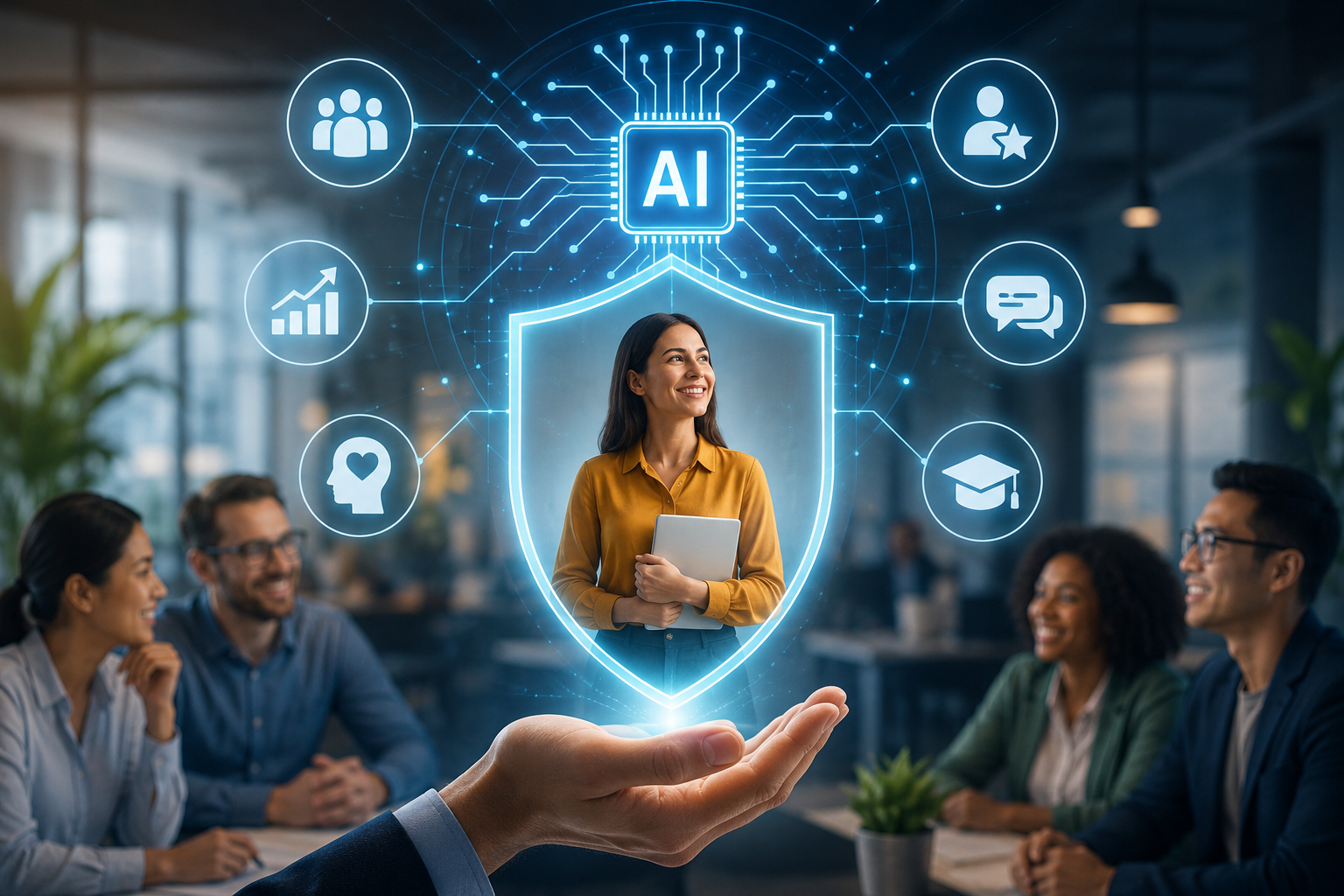
This is where Artificial Intelligence (AI) is transforming Human Resources. Instead of reacting after employees decide to resign, organizations can now use AI to predict turnover risks, personalize employee experiences, automate HR support, and build stronger workplace relationships.
In this blog, we'll explore how AI is reshaping employee retention strategies, the benefits it offers HR teams, and how businesses can leverage AI to build a more engaged and loyal workforce.
Why Employee Retention Matters More Than Ever
Employee retention directly impacts organizational success. Losing experienced employees means losing valuable knowledge, disrupting team collaboration, and spending additional time and money on hiring and training replacements.
Poor retention can lead to:
Higher recruitment and onboarding costs
Lower employee morale
Reduced productivity
Increased workload for existing teams
Lower customer satisfaction
Loss of institutional knowledge
Organizations that prioritize employee experience are better positioned to retain skilled professionals and maintain a competitive advantage.
What is AI in Employee Retention?
AI in employee retention refers to using artificial intelligence, machine learning, predictive analytics, and automation to understand employee behavior, improve engagement, identify retention risks, and support employees throughout their journey.
Instead of relying solely on annual surveys or manual HR processes, AI continuously analyzes employee data to provide real-time insights and proactive recommendations.
AI-powered HR solutions help organizations:
Predict employee turnover
Personalize employee experiences
Automate HR support
Recommend learning opportunities
Improve communication
Monitor engagement trends
Support employee well-being
Key Statistics That Highlight the Importance of AI in HR
Several industry reports demonstrate why organizations are investing in AI-driven HR solutions:
Companies with highly engaged employees experience higher productivity and profitability, according to Gallup.
LinkedIn Learning reports that employees are significantly more likely to remain with organizations that provide career development opportunities.
AI-powered HR automation can reduce administrative workloads, allowing HR teams to focus more on strategic initiatives such as employee engagement and retention.
Organizations using predictive analytics are increasingly identifying turnover risks before employees resign, enabling proactive intervention.
These trends highlight that employee retention is no longer driven by salary alone; it depends on the overall employee experience.
How Does AI Improve Employee Retention?
1. Predicting Employee Turnover Before It Happens
One of AI's biggest advantages is predictive analytics.
AI systems analyze patterns such as:
Employee engagement
Attendance trends
Performance history
Promotion frequency
Internal mobility
Feedback sentiment
Learning participation
When AI identifies employees who may be at risk of leaving, HR teams receive early alerts and can take action before it's too late.
This proactive approach helps reduce unexpected resignations.
2. Delivering Personalized Employee Experiences
Every employee has different career goals, learning preferences, and motivations.
AI enables personalized employee experiences by recommending:
Learning courses
Career development plans
Internal job opportunities
Mentorship programs
Wellness initiatives
Recognition programs
Personalization makes employees feel valued and increases long-term engagement.
3. Automating HR Support with AI Assistants
Employees often have routine HR questions regarding:
Leave policies
Payroll
Benefits
Attendance
Reimbursements
Company policies
IT requests
Instead of waiting for HR responses, AI-powered virtual assistants provide instant, 24/7 support.
This improves employee satisfaction while reducing repetitive HR workloads.
4. Improving Employee Engagement
Traditional employee engagement surveys are conducted quarterly or annually.
AI continuously monitors engagement using:
Pulse surveys
Feedback analysis
Sentiment analysis
Internal communication patterns
HR teams gain real-time insights into employee satisfaction and can address concerns quickly.
Higher engagement often translates into stronger retention.
5. Supporting Career Development
Career growth remains one of the top reasons employees stay with an organization.
AI helps employees grow by recommending:
Personalized learning paths
Certification programs
Skill development opportunities
Internal career moves
Leadership training
Employees who see opportunities for advancement are more likely to remain committed to the organization.
6. Enhancing Performance Management
Traditional performance reviews are often infrequent and subjective.
AI enables continuous performance management through:
Goal tracking
Automated feedback
Performance insights
Achievement recognition
Skill gap analysis
Managers receive better visibility into employee progress while employees receive timely coaching.
7. Identifying Burnout Early
Employee burnout is a leading cause of voluntary resignations.
AI can identify warning signs such as:
Reduced productivity
Increased absenteeism
Declining engagement
Excessive overtime
Negative feedback trends
HR leaders can then intervene by offering flexible work arrangements, wellness programs, or additional support.
8. Strengthening Internal Communication
Poor communication often creates employee frustration.
AI-powered communication platforms ensure employees receive timely answers, updates, and company announcements.
Employees remain informed without overwhelming HR teams.
Better communication builds trust and improves workplace culture.
Best Practices for Using AI in Employee Retention
Organizations should follow these best practices to maximize AI's impact:
Combine AI insights with human decision-making.
Be transparent about how employee data is collected and used.
Protect employee privacy with strong data governance.
Regularly update AI models with accurate data.
Use AI to support, not replace, HR professionals.
Measure KPIs such as turnover rate, employee satisfaction, engagement scores, and retention improvements.
A balanced approach ensures AI enhances the employee experience while maintaining trust.
Future of AI in Employee Retention
AI is expected to play an even greater role in workforce management over the next few years. Emerging capabilities include:
Generative AI for HR support
AI-powered career coaching
Intelligent workforce planning
Advanced sentiment analysis
Personalized employee wellness recommendations
Predictive workforce analytics
Conversational AI for employee self-service
Organizations that adopt these technologies early will be better equipped to attract, engage, and retain top talent in an increasingly competitive job market.
How Voiceoc Helps HR Teams Improve Employee Retention?
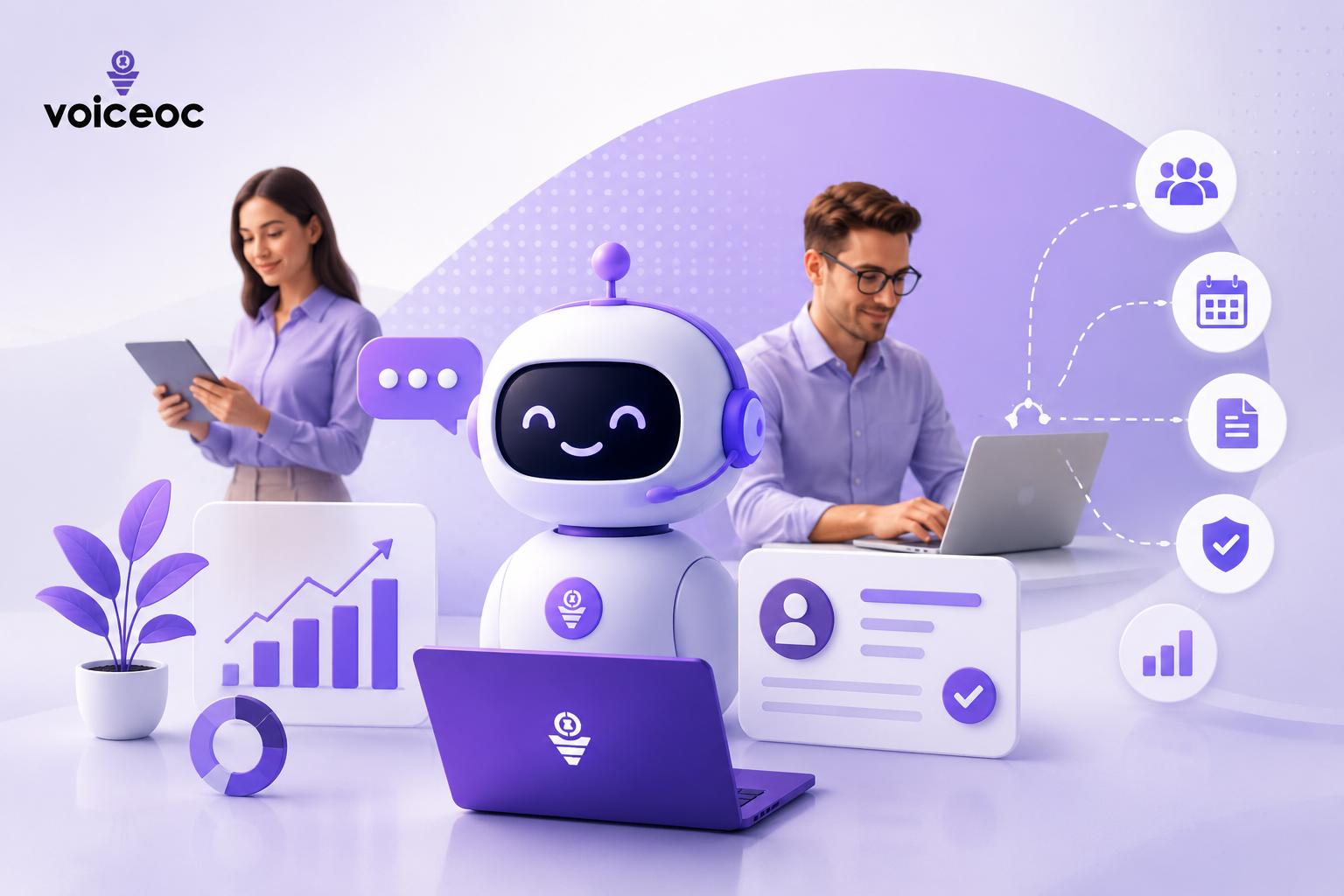
Modern HR teams need more than traditional help desks, they need intelligent, always-on employee support. Voiceoc provides AI-powered conversational solutions that streamline HR operations and enhance the employee experience.
With Voiceoc, organizations can:
Automate repetitive HR queries with AI virtual assistants
Provide 24/7 employee self-service support
Reduce HR ticket resolution time
Improve internal communication
Deliver consistent responses across HR workflows
Free HR teams to focus on employee engagement and strategic initiatives
By reducing response times and ensuring employees receive instant assistance, Voiceoc helps create a more responsive and supportive workplace, key factors in improving employee satisfaction and retention.
Conclusion
Employee retention is no longer just an HR metric; it's a business priority. Employees expect personalized experiences, career growth opportunities, quick support, and a workplace that values their well-being. Artificial Intelligence enables organizations to meet these expectations through predictive analytics, automation, and data-driven decision-making.
From identifying turnover risks to delivering personalized learning, automating HR support, and improving engagement, AI empowers organizations to build stronger relationships with their employees. Rather than replacing HR professionals, AI enhances their ability to make informed decisions and focus on what matters most: creating an exceptional employee experience.
As businesses continue to embrace digital transformation, investing in AI-powered HR solutions will become essential for retaining top talent and building a resilient workforce. Platforms like Voiceoc make this transition easier by providing intelligent HR automation that improves employee support, streamlines operations, and contributes to long-term retention success.
Frequently Asked Questions
1. How does AI help improve employee retention?
AI helps predict employee turnover, personalize career development, automate HR support, monitor engagement, and identify burnout risks, allowing organizations to take proactive steps to retain talent.
2. What are the benefits of AI in HR?
AI improves employee engagement, reduces administrative work, enhances decision-making, provides 24/7 employee support, and helps HR teams focus on strategic initiatives.
3. Can AI replace HR professionals?
No. AI is designed to assist HR teams by automating repetitive tasks and providing insights, while human professionals continue to manage relationships, leadership, and strategic workforce decisions.
4. Why is employee retention important?
High employee retention reduces hiring costs, preserves organizational knowledge, boosts productivity, strengthens workplace culture, and improves overall business performance.
5. How does Voiceoc support HR automation?
Voiceoc offers AI-powered virtual assistants that automate HR queries, reduce ticket resolution time, improve employee communication, and enhance the overall employee experience, helping organizations retain their workforce more effectively.
Connect with Voiceoc today!
Thank you! Your submission has been received!
Oops! Something went wrong while submitting the form.
Topics:
Read More
July 29, 2026
How Does Voiceoc Handle High-Volume Finance Support Requests Using AI?








.svg)
.svg)