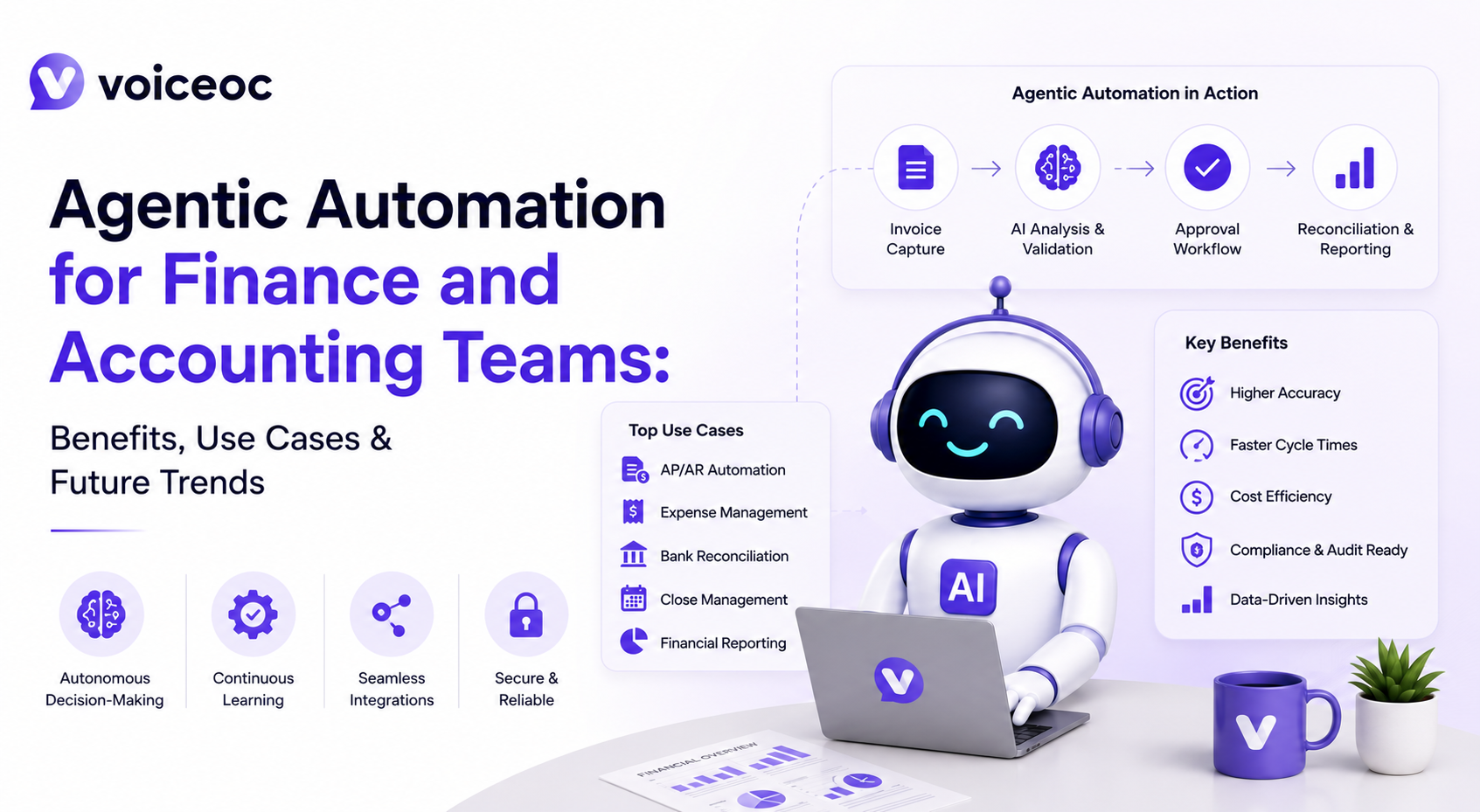
Agentic Automation for Finance and Accounting Teams: The Future of Intelligent Financial Operations
June 17, 2026
The finance and accounting function is undergoing a major transformation. Traditional automation technologies have already helped organizations reduce manual work, improve accuracy, and streamline repetitive processes. However, businesses are now moving beyond simple automation toward a more intelligent approach known as Agentic Automation.
Agentic Automation combines artificial intelligence (AI), machine learning, natural language processing (NLP), and autonomous decision-making capabilities to create AI agents that can independently perform complex financial tasks, adapt to changing conditions, and continuously optimize workflows.
For finance and accounting teams, this technology offers a significant opportunity to improve operational efficiency, reduce costs, enhance compliance, and provide strategic insights that drive business growth.
In this article, we'll explore what agentic automation is, how it works, key use cases in finance and accounting, benefits, challenges, implementation strategies, and how platforms like Voiceoc are helping organizations embrace intelligent automation.
What Is Agentic Automation?
Agentic Automation refers to the use of AI-powered agents that can independently execute tasks, make decisions, learn from data, and collaborate with humans to achieve specific business goals.
Unlike traditional automation tools that follow predefined rules, agentic systems can:
Understand context
Analyze large volumes of financial data
Make recommendations
Take actions autonomously
Learn from outcomes
Improve performance over time
Think of agentic automation as moving from a calculator to a virtual financial assistant that can understand objectives, execute workflows, and optimize processes with minimal human intervention.
Why Finance and Accounting Teams Need Agentic Automation?
Finance departments face increasing pressure to:
Reduce operational costs
Accelerate financial close cycles
Improve compliance
Enhance forecasting accuracy
Manage growing transaction volumes
Deliver strategic business insights
At the same time, finance professionals spend a significant portion of their workday on repetitive tasks such as:
Invoice processing
Expense approvals
Data entry
Reconciliation
Report generation
Audit preparation
According to multiple industry studies, finance teams often spend over 60% of their time on transactional activities, leaving limited capacity for strategic analysis and business planning.
Agentic automation helps shift finance professionals from administrative work to higher-value activities such as:
Financial planning
Risk management
Business forecasting
Investment analysis
Strategic decision-making
How Agentic Automation Works in Finance?
Agentic automation combines multiple technologies to create intelligent financial workflows.
1. Data Collection
AI agents gather information from:
ERP systems
Accounting software
Banking platforms
Vendor portals
CRM systems
Financial databases
2. Context Understanding
Natural Language Processing (NLP) helps agents understand:
Financial documents
Emails
Contracts
Purchase orders
Invoices
3. Decision Making
Using machine learning models and business rules, agents can:
Validate transactions
Detect anomalies
Recommend actions
Prioritize approvals
4. Task Execution
The agent performs actions such as:
Posting journal entries
Updating records
Sending notifications
Generating reports
5. Continuous Learning
AI agents learn from:
Historical data
User interactions
Workflow outcomes
Regulatory updates
This allows continuous improvement over time.
Key Use Cases of Agentic Automation in Finance and Accounting
Key Use Cases of Agentic Automation in Finance and Accounting
1. Accounts Payable Automation
Accounts payable processes often involve repetitive tasks that consume significant time.
Agentic AI can:
Capture invoice data automatically
Match invoices with purchase orders
Verify payment details
Detect duplicate invoices
Route approvals intelligently
Schedule vendor payments
Benefits
Faster invoice processing
Reduced manual errors
Improved vendor relationships
Better cash flow management
2. Accounts Receivable Management
Managing receivables is critical for maintaining healthy cash flow.
AI agents can:
Track outstanding invoices
Send payment reminders
Predict late payments
Prioritize collection efforts
Recommend collection strategies
Benefits
Improved cash flow
Reduced Days Sales Outstanding (DSO)
Faster collections
Better customer experience
3. Financial Close Automation
Month-end and year-end close processes can be stressful and time-consuming.
Agentic automation helps by:
Reconciling accounts automatically
Validating transactions
Identifying discrepancies
Posting journal entries
Generating close reports
Benefits
Faster close cycles
Increased accuracy
Improved compliance
Reduced workload
4. Intelligent Expense Management
Expense management often requires extensive manual review.
AI agents can:
Verify receipts
Detect policy violations
Categorize expenses
Approve routine claims
Escalate exceptions
Benefits
Faster reimbursements
Reduced fraud
Policy compliance
Better expense visibility
5. Financial Forecasting and Planning
Traditional forecasting methods often struggle with rapidly changing business conditions.
Agentic AI can:
Analyze historical trends
Monitor market conditions
Predict future performance
Create dynamic forecasts
Suggest budget adjustments
Benefits
Improved forecast accuracy
Better strategic planning
Faster decision-making
6. Fraud Detection and Risk Management
Financial fraud remains a major concern for organizations worldwide.
Agentic automation can continuously monitor:
Transactions
Payment patterns
Vendor activities
Employee expenses
AI agents can identify unusual behavior and trigger alerts before losses occur.
Benefits
Reduced financial risk
Early fraud detection
Improved security
Enhanced compliance
7. Audit Preparation and Compliance
Preparing for audits requires extensive documentation and validation.
AI agents can:
Organize audit trails
Collect supporting documents
Verify compliance requirements
Generate audit reports
Benefits
Reduced audit preparation time
Improved transparency
Stronger compliance posture
Benefits of Agentic Automation for Finance Teams
Increased Productivity
AI agents handle repetitive tasks, allowing finance professionals to focus on strategic work.
Impact
More output with fewer resources
Improved employee satisfaction
Reduced operational bottlenecks
Higher Accuracy
Human errors in accounting can lead to costly consequences.
Agentic automation improves:
Data validation
Transaction accuracy
Reporting consistency
Impact
Fewer mistakes
Better financial reporting
Improved stakeholder trust
Faster Decision-Making
AI agents analyze data in real time and provide actionable insights.
Regulatory requirements continue to grow more complex.
Agentic AI helps maintain compliance through:
Continuous monitoring
Automated documentation
Real-time alerts
Impact
Reduced compliance risks
Improved governance
Better Employee Experience
Finance professionals prefer analytical and strategic work over repetitive administrative tasks.
Agentic automation reduces mundane activities and supports:
Career development
Job satisfaction
Professional growth
Challenges of Implementing Agentic Automation
Despite its advantages, organizations may face several challenges.
Data Quality Issues
Poor-quality financial data can impact AI performance.
Solution
Data cleansing initiatives
Governance frameworks
Standardized processes
Change Management
Employees may resist new technologies.
Solution
Training programs
Transparent communication
Gradual implementation
Integration Complexity
Finance systems often include multiple applications.
Solution
API-based integrations
Modern automation platforms
Phased deployment strategies
Regulatory Considerations
Financial operations require strict compliance.
Solution
Human oversight
Compliance monitoring
Explainable AI models
Best Practices for Successful Agentic Automation Adoption
Start with High-Volume Processes
Focus on areas such as:
Invoice processing
Expense management
Accounts payable
These deliver quick wins and measurable ROI.
Define Clear Objectives
Establish measurable goals, including:
Cost reduction
Faster close cycles
Improved accuracy
Compliance improvements
Maintain Human Oversight
AI agents should augment finance professionals rather than replace them.
Human review remains essential for:
Strategic decisions
Regulatory approvals
Exception handling
Monitor Performance Continuously
Track metrics such as:
Processing time
Error rates
Cost savings
Employee productivity
Customer satisfaction
Future Trends in Agentic Finance Automation
The future of finance automation will likely include:
Autonomous Finance Operations
AI agents are managing end-to-end financial processes with minimal intervention.
Hyper-Personalized Financial Insights
Real-time recommendations tailored to business goals.
Conversational Finance Assistants
Employees interacting with financial systems through natural language conversations.
Predictive Risk Intelligence
AI continuously identifying and mitigating financial risks before they impact operations.
Multi-Agent Collaboration
Multiple AI agents working together across finance, procurement, HR, and operations.
These developments will create more agile, intelligent, and resilient finance organizations.
How Voiceoc Supports Agentic Automation for Finance Teams?
As organizations seek smarter ways to automate financial operations, Voiceoc provides AI-powered automation solutions that help businesses streamline finance support processes, improve employee experiences, and reduce operational workloads.
Voiceoc's intelligent AI agents can assist finance teams by:
Automating finance-related employee queries
Handling invoice status requests
Managing reimbursement inquiries
Providing payroll and payment information
Routing finance tickets intelligently
Offering 24/7 employee support
Reducing manual workload for finance teams
Improving response times and service quality
By leveraging conversational AI, workflow automation, and intelligent routing, Voiceoc enables finance departments to focus on strategic initiatives while ensuring employees receive fast and accurate support.
Whether it's finance helpdesk automation, employee self-service, or intelligent financial workflow management, Voiceoc helps organizations build a more efficient and scalable finance operation.
Agentic automation is redefining the future of finance and accounting. Unlike traditional automation solutions, AI-powered agents can understand context, make decisions, learn continuously, and execute complex financial workflows autonomously.
From accounts payable and receivable to forecasting, compliance, fraud detection, and audit preparation, agentic automation delivers measurable benefits, including improved efficiency, reduced costs, greater accuracy, and enhanced employee productivity.
Organizations that embrace agentic automation today will be better positioned to build agile finance operations, improve business resilience, and gain a competitive advantage in an increasingly digital economy.
As finance leaders continue their digital transformation journeys, agentic automation will become a critical component of modern financial management, helping teams move beyond transaction processing and toward strategic value creation.
Connect with Voiceoc today!
Thank you! Your submission has been received!
Oops! Something went wrong while submitting the form.
Topics:
Read More
July 28, 2026
How Does AI Help HR Teams Focus on Strategic Initiatives Instead of Administrative Tasks?










.svg)
.svg)